



Blog / Comparison

Blog

All Comparison New Chevrolet Local Silverado Car Maintenance Tips Monument Chevrolet Service Pasadena Chevrolet Dealer Pasadena Chevrolet Service Pasadena Used Cars Used Chevrolet Used Car Buying Tips Service & Maintenance Commercial Traverse
2027 Chevy Traverse RS vs Z71

2027 Chevy Traverse RS vs Z71

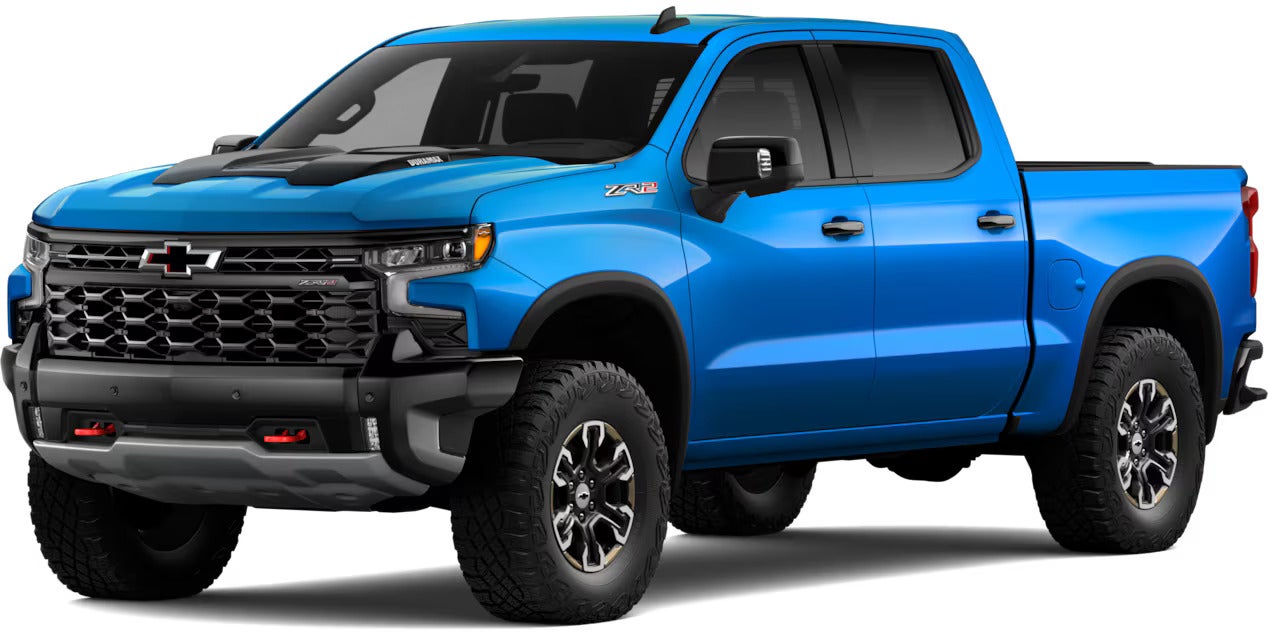
Picking between the 2027 Chevy Traverse RS and Z71 comes down to how you drive day to day, not what looks best in the driveway. Both trims share the same engine and seven passenger layout, but Chevrolet built them for different jobs: one leans into sporty tech and highway comfort, the other into all-weather traction and mild off-pavement capability. If you're weighing the 2027 Chevy Traverse RS vs Z71 for your own garage, we'll walk through the specs, pricing, and real-world use cases so you can decide with confidence. You can also browse our new Traverse inventory to see what's currently available at our Pasadena, Texas showroom. 2027 Chevy Traverse RS vs Z71 at a Glance Chevrolet builds both the 2027 Traverse RS and Z71 around the same 2.5L turbocharged four-cylinder engine, rated at 328 horsepower and 326 lb-ft of torque, paired with an 8-speed automatic transmission. Chevy Traverse 0 to 60 performance and everyday drivability stay consistent whether you pick the RS or the Z71. The real differences show up in drivetrain configuration, ride height, wheel design, and how each trim handles weather and terrain. AWD is optional on the RS (and on the LT), running $2,000 extra, while the Z71 comes with a twin-clutch AWD system as standard equipment built specifically for traction in changing conditions. Every 2027 Traverse, regardless of trim, carries a maximum tow rating of 5,000 lbs. Towing capability isn't a factor separating these two trims. Key Spec Comparison Table Spec Traverse RS Traverse Z71 Engine/Powertrain 2.5L turbo, 328 hp, 326 lb-ft 2.5L turbo, 328 hp, 326 lb-ft Drivetrain FWD standard, AWD optional ($2,000) Advanced Twin-Clutch AWD standard Ground Clearance/Off-Road Feature 6.8 inches 7.8 inches, Terrain Mode, Hill Descent Control, skid plate Wheels 22-inch high gloss black wheels 18-inch high gloss black machined-face wheels, all-terrain tires Starting Price $55,800 $49,100 Towing 5,000 lbs 5,000 lbs Design and Styling: Sporty RS vs Rugged Z71 The 2027 Traverse RS and Z71 wear their personalities on the outside. Chevrolet gives the RS a blacked-out, athletic look for drivers who want their SUV to feel sharp on city streets, while the Z71 goes taller and tougher, signaling it's ready for gravel roads and rougher weather. Exterior Differences Chevrolet equips the RS with blackout styling across the grille, roof rails, and badging, plus 22-inch high gloss black painted aluminum wheels for a cohesive blacked-out theme. It also includes rain sensing wipers, power folding and auto dimming mirrors, RS badging, and a flat bottom steering wheel that reinforces the sporty cabin feel. The Z71 rides on 18-inch high gloss black machined face wheels wrapped in all-terrain tires, with a full inch of extra ground clearance bringing it to 7.8 inches against the RS at 6.8. That added clearance, along with skid plate protection and an off-road tuned suspension, gives the Z71 a genuinely different silhouette from the RS. Interior Materials and Cabin Features Inside, the 2027 Z71 gains a new Oregon seat color, a natural tan finish that replaces the Torch Red accents the trim carried previously. The RS keeps its Jet Black interior with Red decor accents and stitching, and adds heated second row seats, power folding second and third row seating, ambient lighting, and a heated steering wheel. Both cabins feel upscale, but the RS clearly targets comfort-focused families while the Z71 leans toward a more casual, hard-wearing look. Performance and Capability Differences Engine and AWD System Comparison Since both trims share the same 2.5L turbocharged engine and 8-speed automatic, acceleration and daily drivability feel nearly identical between RS and Z71. Adding optional AWD to the RS shifts the feel slightly since that setup adds weight, but power delivery stays consistent. Where things diverge is drivetrain philosophy: Chevrolet reserves the Advanced Twin-Clutch AWD system exclusively for the Z71 as standard equipment, giving it a traction advantage in wet or loose conditions without requiring buyers to pay extra for it. Think of it less as one trim outmuscling the other and more as two different starting points for the same underlying hardware. Fuel economy shifts too: FWD models are EPA estimated at 20 city, 26 highway, and 22 combined MPG, while the AWD Z71 comes in at 20 city, 24 highway, and 21 combined. An AWD RS returns those same figures, so the gap is down to the drivetrain rather than the Z71's extra ride height. Z71 Off-Road Features and Terrain Modes Chevrolet builds the Z71 with Terrain Mode and Hill Descent Control, along with an off-road tuned suspension and skid plate protection underneath. These features make the Z71 well-suited for gravel driveways, muddy trailheads, or the kind of unpaved roads you'll find outside Pasadena on the way to weekend outings. The capability here is off-road-inspired and built for mild terrain rather than true rock crawling or technical trail work. Families dealing with Houston-area rain and flooding will likely appreciate the added traction more than hardcore trail use. If you want to feel this difference firsthand, contact our team to schedule a comparison test drive between the two trims. Technology and Safety Features Shared Across Trims Both the RS and Z71 come standard with a 17.7-inch touchscreen, an 11-inch digital driver display, wireless charging, wireless Apple CarPlay and Android Auto, and USB-C ports in all three rows, with Google built-in compatibility available. Chevrolet also adds a new interior camera for 2027, standard on the RS, for added peace of mind on long drives or when kids are in the back seats. On the safety side, every 2027 Traverse includes Chevy Safety Assist, a six-feature bundle covering Automatic Emergency Braking, Front Pedestrian Braking, Forward Collision Alert, Lane Keep Assist with Lane Departure Warning, IntelliBeam automatic high beams, and a Following Distance Indicator. Blind Zone Steering Assist, Rear Cross Traffic Braking, and a Safety Alert Seat come standard as well, part of the more than 20 standard safety and driver assistance features Chevrolet fits to every trim. Z71 buyers can add the Driver Confidence Package for HD Surround Vision, a Rear Camera Mirror, Rear Pedestrian Alert, and Traffic Sign Recognition, or the Enhanced Driving Package for Super Cruise and Driver Attention Assist. The RS includes that content as standard equipment. The biggest tech differentiator is Super Cruise itself. Chevrolet makes it standard on the RS for 2027, complete with a 3-year OnStar Super Cruise plan, while it remains an optional add-on for the Z71 and LT. For drivers who spend a lot of time on Houston freeway commuting, that hands-free highway assist is a meaningful RS advantage worth roughly the price of the package on its own. 2027 Traverse Price Comparison: RS vs Z71 The 2027 Chevy Traverse Z71 starts at $49,100 with its Advanced Twin-Clutch AWD included, while the RS starts at $55,800 with front-wheel drive and $57,800 with AWD. All of these are Chevrolet's published starting MSRPs and exclude destination charge, tax, title, license, and dealer fees. For reference, the entry-level LT starts at $40,800 on the same basis, and the High Country tops the four-trim lineup at $56,100. Because final pricing varies by configuration and current offers, we'd recommend checking our inventory or reaching out to get pre-approved for financing before you finalize a budget. Cargo Space, Seating, and Towing Capacity Both the RS and Z71 offer identical cargo and passenger figures, which makes this category less about choosing between them and more about confirming the Traverse fits your family's needs. The RS and Z71 each seat seven passengers, with second-row captain's chairs standard on both. Eight-passenger seating is available only on the LT, which offers an optional second-row bench seat. Cargo space checks in at 22.9 cubic feet behind the third row, expanding to 56.6 cubic feet with the third row folded, and a class-leading 98 cubic feet when both rear rows fold flat. Second row legroom measures 41.5 inches, with 32.1 inches in the third row, comfortable enough for adults on longer trips. Towing capacity holds steady at 5,000 lbs across every 2027 Traverse trim and drivetrain when properly equipped, which is worth knowing if you're planning to tow a boat out to Galveston Bay for a weekend on the water. Neither trim gains a towing edge here, so that decision comes down to styling, tech, and drivetrain preference instead. Which 2027 Traverse Trim Is Right for You? Choose the Z71 If You… You regularly drive on gravel, unpaved roads, or deal with heavy Houston-area rain and want that standard AWD traction without paying extra for it. A slightly more rugged, utilitarian interior that shrugs off mud, sand, and outdoor gear also matters more to you than a plush cabin. Choose the RS If You… Most of your miles come from highway commuting, and standard Super Cruise for hands-free stretches on long drives sounds appealing. A sportier blacked-out look and premium comfort touches like ventilated front seats matter more to you than the extra ground clearance the Z71 offers. Frequently Asked Questions About the 2027 Chevy Traverse RS vs Z71 Is the Chevrolet Traverse a good car overall? Chevrolet has positioned the Traverse as a family-focused three-row SUV with strong tech and safety features across trims, making it a solid option for buyers who want space and standard safety assistance features. Are Chevy Traverse models good cars for towing? Yes, every 2027 trim offers a 5,000 lb max tow rating when properly equipped, and the trailering package is included, which covers small boats, campers, and utility trailers for most Texas families. Does the Traverse RS require AWD? No, AWD is a $2,000 option on the RS, while FWD comes standard. What is the 2027 Traverse release date? The 2027 Traverse is on sale now. Chevrolet lists full pricing and specs for all four trims, and you can check our inventory to see what's on the ground in Pasadena. Visit Monument Chevrolet to Test Drive the 2027 Traverse See the Differences for Yourself Specs on a page only tell part of the story. Feeling the twin-clutch AWD grip on a wet road, or testing Super Cruise on the freeway, makes the difference between these trims much clearer. Ready to Compare the Traverse RS and Z71 in Person? Stop by Monument Chevrolet at 3940 Pasadena Freeway, Pasadena, TX 77503 to browse our new Traverse inventory, schedule a service appointment for your current vehicle, or get pre-approved for financing before you visit. As a family-owned dealership serving the Greater Houston area for over 50 years, we're glad to walk you through both trims with straightforward pricing and no pressure.
2026 Chevy Silverado truck

2026 Chevy Silverado vs. Toyota Tundra

Choosing between a full-size truck often comes down to what happens after you drive it off the lot. Can it tow your boat to Lake Conroe without straining? Will it still run strong after 100,000 miles of Houston freeway driving? We're breaking down the 2026 Chevy Silverado vs. Toyota Tundra debate with the specs, pricing, and reliability numbers buyers actually need. If you want to see these trucks in person, browse our new inventory at Monument Chevrolet. 2026 Silverado vs. Tundra: Which Truck Wins for Houston Drivers? Both trucks appeal to different priorities. The Silverado leans into versatility, with nine trims and four engine choices that let buyers build a truck around their specific job or lifestyle. Toyota went a different direction with the Tundra, offering seven trims and a twin-turbo lineup (including a hybrid) that's built more around efficiency and comfort than sheer configuration count. For Greater Houston drivers who tow, haul, and commute in equal measure, the differences in capability and price start to matter fast. Price and Value Comparison Price is often the first filter buyers apply, and it's where the gap between these two trucks becomes clear right away. Starting MSRP and Trim Pricing The 2026 Silverado 1500 starts at $39,695 for the Work Truck trim, including a $2,795 destination charge. Trims run from Work Truck and Custom through Custom Trail Boss, LT, LT Trail Boss, RST, LTZ, High Country, and ZR2, with pricing that spans roughly $36,900 to $71,800 before destination. The Tundra starts higher, at $41,260 for the SR Double Cab RWD, with trims including SR, SR5, Limited, Platinum, 1794 Edition, TRD Pro, and Capstone, topping out near $80,800 for the Capstone. That puts the Silverado's entry price about $4,360 lower than the Tundra's, excluding destination fees on both. All figures are approximate and subject to change, so confirm current pricing with our team before you buy. Cost of Ownership in Houston Toyota backs the Tundra with a 3-year/36,000-mile comprehensive warranty and a 5-year/60,000-mile powertrain warranty, plus ToyotaCare, which covers factory-scheduled maintenance and 24-hour roadside assistance for 2 years or 25,000 miles. On i-FORCE MAX models, hybrid-related components are covered for 8 years/100,000 miles and the hybrid battery for 10 years/150,000 miles. Chevrolet counters with a lower upfront price and dependability data that holds its own against Toyota's reputation, more on that below. Size, Towing, and Payload Capability Capability is where a lot of Houston-area buyers make their final decision, especially if towing or hauling is part of the job. Bed and Cab Configurations The Silverado comes in Regular, Double, and Crew cab styles with bed lengths of 5'8", 6.5', and 8 feet. It measures 97.5 inches wide with mirrors and seats up to six. Toyota keeps things simpler on the Tundra, offering Double Cab and CrewMax setups with bed lengths of 5.5, 6.5, and 8.1 feet, seating five. Both trucks give buyers real flexibility, but the Silverado's extra cab option and passenger capacity give it a slight edge for larger crews or job sites. Max Towing and Payload Numbers Engine/Powertrain Drivetrain Transmission Horsepower/Torque Max Towing Fuel Economy (EPA) Silverado 2.7L TurboMax RWD/4WD 8-speed auto 310 hp / 430 lb-ft 9,500 lbs ~18/21/19 mpg (RWD) Silverado 5.3L EcoTec3 V8 RWD/4WD 10-speed auto 355 hp / 383 lb-ft 11,300 lbs ~17/23/19 mpg Silverado 6.2L EcoTec3 V8 4WD 10-speed auto 420 hp / 460 lb-ft 13,300 lbs ~16/21/18 mpg Silverado 3.0L Duramax RWD/4WD 10-speed auto 305 hp / 495 lb-ft 13,300 lbs 23/28–29/25–26 mpg Tundra 3.4L i-FORCE V6 (SR) RWD/4WD 10-speed auto 348 hp / 405 lb-ft 8,300 lbs 18/24/20 (RWD); 17/23/19 (4WD) Tundra 3.4L i-FORCE V6 (SR5+) RWD/4WD 10-speed auto 389 hp / 479 lb-ft 12,000 lbs 18/23/20 (RWD); 17/22/19 (4WD) Tundra i-FORCE MAX Hybrid RWD/4WD (CrewMax only) 10-speed auto 437 hp / 583 lb-ft 11,450 lbs 20/24/22 (RWD); 19/22/20 (4WD) The Silverado hits 13,300 lbs of towing when properly equipped with the Max Trailering Package, outpacing the Tundra's best figure of 12,000 lbs on the SR5 Double Cab RWD. Payload runs the same direction: the Silverado reaches up to 2,260 lbs with the 2.7L TurboMax, compared to the Tundra's 1,940 lbs on Double Cab SR and SR5 models. For buyers towing boats to Galveston Bay or hauling equipment for local trades, a 1,300-lb towing advantage means fewer trips and more confidence on the road. Engine Performance and Fuel Efficiency Powertrain choice shapes everything from daily driving feel to long-term running costs, and both trucks take different approaches here. Silverado Powertrain Options Chevrolet, through General Motors, gives Silverado buyers four distinct engines. The 2.7L TurboMax delivers 310 hp and 430 lb-ft, a strong choice for daily driving with real towing muscle. The 5.3L EcoTec3 V8 offers 355 hp and 383 lb-ft for buyers who want traditional V8 character, while the 6.2L EcoTec3 V8 tops the gas lineup at 420 hp and 460 lb-ft. The 3.0L Duramax turbodiesel rounds things out with 305 hp and 495 lb-ft, the most torque in the lineup, and Tundra offers no diesel option at all. Tundra Powertrain Options Toyota's approach centers on turbocharged V6 power. The 3.4L twin-turbo i-FORCE produces 348 hp and 405 lb-ft in the SR trim, stepping up to 389 hp and 479 lb-ft in SR5 and above. The i-FORCE MAX hybrid, available on Limited trims and up, produces 437 hp and 583 lb-ft, numbers that exceed every gas engine in the Silverado lineup. That's a real strength worth acknowledging if you value peak power and torque over diesel efficiency or configuration variety. Fuel Economy Side-by-Side The Duramax diesel is the fuel economy standout at roughly 23 city and 28 to 29 highway, 25 to 26 combined depending on configuration. The 2.7L TurboMax comes in around 18/21/19 mpg. On the Tundra side, the i-FORCE MAX hybrid returns 20/24/22 mpg in rear-drive form, dropping to 19/22/20 with 4WD, while the base SR sits at 18/24/20. For Houston commuters logging serious freeway miles, the Duramax's highway numbers are the strongest fuel-economy answer in either lineup, and no Tundra offers a diesel to match them. Our team can walk you through which powertrain fits your towing needs, help with financing tailored to your build, or get your current truck serviced and ready for trade-in. Explore financing options with Monument Chevrolet. Technology, Safety, and Interior Comfort Both trucks come well-equipped, but the standard safety tech tells slightly different stories. The Silverado includes Chevy Safety Assist standard, bundling six active safety features, and offers Super Cruise hands-free driving on the High Country trim, a system that works even while towing and covers over 600,000 miles of compatible roads across the U.S. and Canada. Screen sizes on the Silverado reach up to 13.4 inches for the touchscreen and 12.3 inches for the digital cluster, backed by an available 8-camera, 14-view trailering system for tight maneuvers. Toyota Safety Sense 2.5 comes standard across the Tundra lineup, offering adaptive cruise control and lane-tracing assistance, though it remains hands-on only, without a hands-free option like Super Cruise. The Tundra's touchscreen scales up to 14 inches on Limited trims and above, paired with a 12.3-inch digital cluster and an available Panoramic View Monitor. Toyota's infotainment layout and interior materials are well regarded, and that's a fair strength to note. Still, for buyers who tow regularly, the Silverado's hands-free Super Cruise while trailering is a capability the Tundra simply doesn't match. Reliability and Local Service Support Reliability data offers one of the clearest ways to compare these trucks over the long haul. In the 2026 J.D. Power dependability study, the Silverado 1500 finished second in its segment, while the Tundra didn't rank, landing below the segment average. That builds on the Silverado's strong recent track record, having placed at the top of its segment in the 2025 J.D. Power Vehicle Dependability Study and tying for the top spot in the 2025 Initial Quality Study. Toyota's reputation for long-term reliability is well earned, but recent independent data increasingly favors the Silverado on dependability specifically. Reliability data only matters as much as the service network behind it. Monument Chevrolet is the only family-owned Chevrolet dealership in Greater Houston, run by the same family for generations, with a full parts and service operation based right here in Pasadena, TX. Why Houston Drivers Choose the Silverado For drivers towing boats to Galveston Bay or Lake Conroe, hauling equipment for local trades, or just running the daily grind on Houston freeways, the Silverado's advantages line up with real needs: 13,300-lb max towing beats the Tundra's 12,000-lb ceiling Duramax diesel offers a fuel-efficiency option Toyota doesn't have Super Cruise brings hands-free confidence to long commutes and highway towing alike Add in a $4,360 lower starting price and a stronger recent dependability record, and the value case builds quickly. Visit Monument Chevrolet in Pasadena Today The 2026 Chevy Silverado vs. Toyota Tundra comparison comes down to what you tow, your daily commute, and your budget upfront. We think the Silverado's towing capacity and engine variety, paired with its dependability track record, make it the stronger choice for most Greater Houston drivers. Get Started Stop by Monument Chevrolet at 3940 Pasadena Fwy, Pasadena, TX 77503, to see the lineup in person, or get in touch with our team to schedule a test drive and talk through financing.

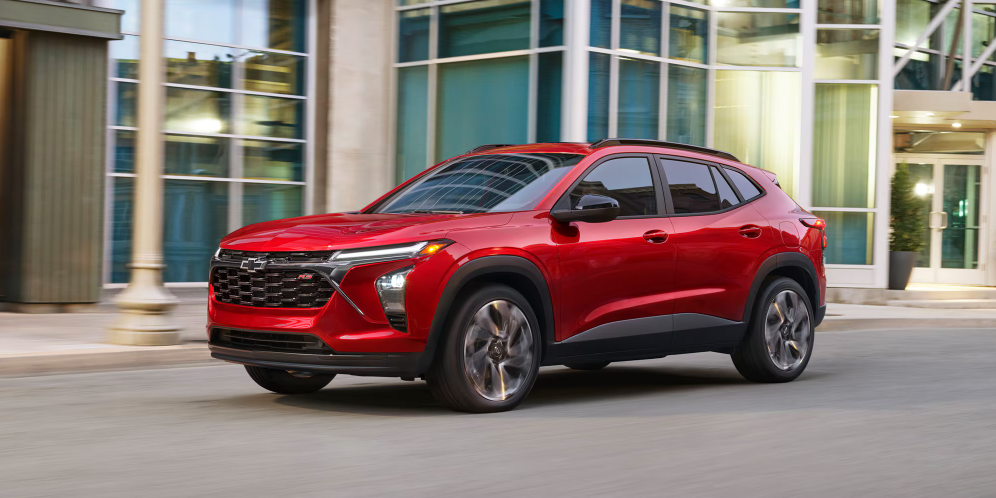
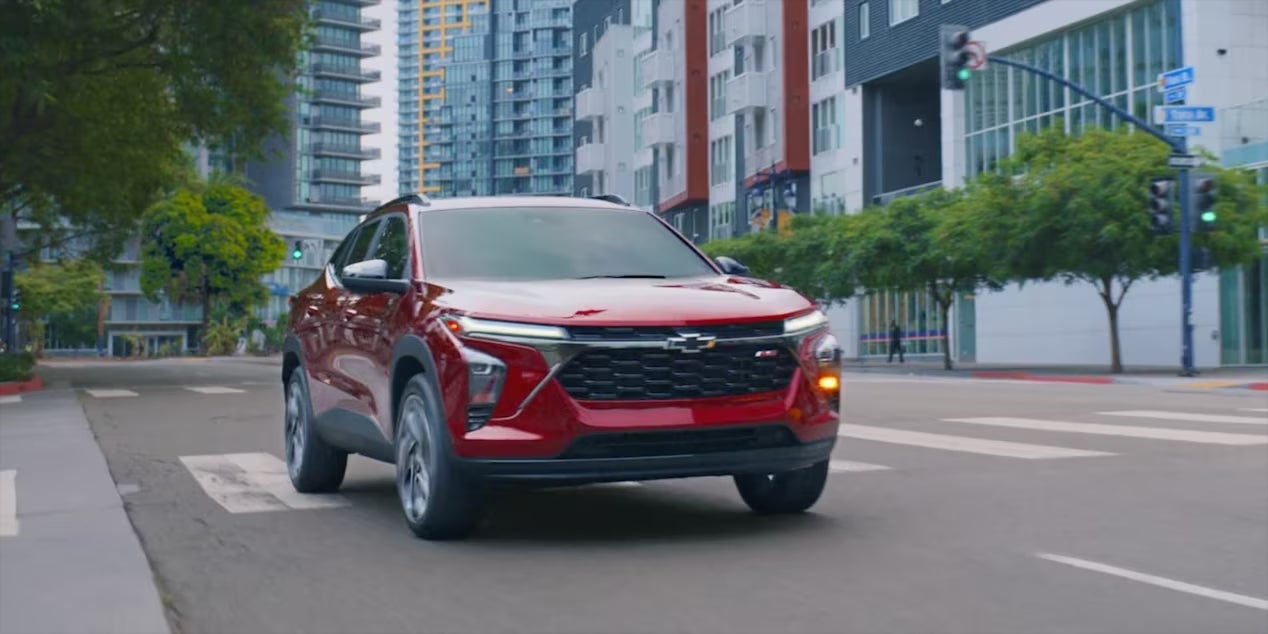
2026 Chevrolet Trax driving on city street

2026 Chevy Trax vs. Kia Seltos: Which Compact SUV Wins for Houston Drivers?

Compact SUV shoppers in Pasadena and across Greater Houston have two strong options this year. The choice between the 2026 Chevy Trax vs. Kia Seltos comes down to how you drive, what you carry, and what you want your monthly payment to look like. Chevrolet leans into affordability and consistency across the entire trim lineup, while Kia offers more power and all-wheel drive for buyers willing to pay for it. Here's what each one brings to the table, along with the numbers side by side. If you'd rather skip ahead and see the Trax in person, you can browse our new vehicle inventory at Monument Chevrolet anytime. 2026 Chevy Trax: Standout Features and Value Chevrolet built the 2026 Trax to be a genuinely useful compact SUV without a midsize price tag. Every trim shares the same drivetrain and fuel economy numbers, so you're not paying more to get better mileage. The 2026 Trax comes in five trims: LS, 1RS, LT, 2RS, and ACTIV. MSRP (including destination) starts at $23,495 for the LS, with the 1RS and LT both landing at $24,995, and the 2RS and ACTIV topping the lineup at $27,195. Every Trax runs the same 1.2L turbocharged 3-cylinder ECOTEC engine, producing 137 hp and 162 lb-ft of torque through a 6-speed automatic transmission. There's no AWD option here, but for most Houston commutes, FWD gets the job done. Inside, LS and 1RS trims get an 8-inch touchscreen, while LT, 2RS, and ACTIV step up to an 11-inch touchscreen paired with an 8-inch digital instrument cluster. Wireless Apple CarPlay and Android Auto come standard across the board, and Wi-Fi hotspot capability is available on every trim. Cargo space behind the rear seat measures 25.6 cubic feet, expanding to 54.1 cubic feet with the seats folded. 2026 Kia Seltos: Standout Features and Value The Seltos takes a different approach, offering buyers more choice in performance and drivetrain configuration, along with a more upscale cabin feel in its higher trims. It's a legitimate alternative for drivers who want extra power or the security of all-wheel drive, even if it means paying more for it. The Seltos lineup includes LX, S, EX, and SX trims. A new FWD LX option lowers the entry price to $23,790, with AWD adding $1,200 to bring that trim to $24,990. Moving up, the S starts at $25,490 FWD or $26,990 AWD, and the EX runs $26,490 FWD or $28,690 AWD. The SX is AWD-only and comes exclusively with the turbocharged engine, priced at $31,490. All figures exclude Kia's $1,495 destination charge. All figures are MSRP-based and exclude Kia's $1,495 destination charge, and are subject to change. Most Seltos trims use a 2.0L 4-cylinder engine producing 147 hp, while the SX AWD gets an exclusive 1.6L turbo good for 190 hp, a notable power advantage over the Trax. S, EX, and SX trims include a standard 10.25-inch touchscreen with Kia Connect and voice recognition, and EX/SX buyers can option dual 10.25-inch panoramic displays with a digital cluster. Higher trims also offer a smart power liftgate, heated front seats, and a 10-way power driver's seat. Cargo volume behind the rear seat comes in at 26.6 cubic feet, and folding the seats opens up 62.8 cubic feet, more than the Trax offers with seats down. Head-to-Head Comparison: Price, Size, and Fuel Efficiency Line up the specs directly and the differences become much clearer. The Seltos wins on maximum cargo volume and offers more power with its turbo AWD option, but the Trax counters with a lower starting price and fuel economy that never changes no matter which trim you choose. Spec Trax Seltos Engine 1.2L turbo 3-cyl (ECOTEC) 2.0L 4-cyl (standard); 1.6L turbo (SX AWD only) Drivetrain FWD only FWD standard; AWD available on most trims Transmission 6-speed automatic CVT (2.0L); 8-speed automatic (1.6L turbo) Horsepower/Torque 137 hp / 162 lb-ft 147 hp / 132 lb-ft (2.0L); 190 hp / 195 lb-ft (1.6L turbo) Fuel Economy 28/32/30 MPG (all trims) 28/34/31 MPG (FWD 2.0L); 27/31/29 (AWD 2.0L); 24/27/25 (turbo AWD) Cargo Volume 25.6 cu ft behind rear seat / 54.1 cu ft max 26.6 cu ft behind rear seat / 62.8 cu ft max Pricing and Overall Value Compare the two on the same basis and the gap is wider than the sticker prices suggest. The Trax LS starts at $23,495 with destination, against $25,285 for a Seltos LX FWD once Kia's $1,495 destination charge is added, a difference of roughly $1,790. That gap widens quickly once you start adding AWD or the turbo engine to a Seltos build, with the SX AWD landing near $32,985 delivered. If your priority is getting into a new compact SUV without stretching your budget, the Trax has the edge from the first trim on the sheet. Size and Cargo Capacity The Seltos does offer more room with the rear seats folded flat, at 62.8 cubic feet compared to the Trax's 54.1 cubic feet, and its available AWD is a genuine advantage for drivers who deal with unpredictable weather or want extra traction confidence. Behind the rear seat the two are close, with the Trax at 25.6 cubic feet and the Seltos at 26.6, a difference of about one cubic foot. If you want to see how these numbers stack up before making a decision, our team can walk you through the current Trax lineup, or you can get pre-approved for financing ahead of your visit. Fuel Economy for Houston Commutes Every Trax trim delivers 28 city, 32 highway, and 30 combined MPG, regardless of configuration. The Seltos's 2.0L FWD engine earns 28 city, 34 highway, and 31 combined, but add AWD and that falls to 27/31/29, and stepping up to the 1.6L turbo with AWD drops it to 24/27/25. For daily I-45 commutes and stop-and-go traffic around Pasadena, that spread across the Seltos lineup adds up fast at the pump. Safety Features and Driver-Assist Technology Every 2026 Trax comes standard with Chevy Safety Assist, which bundles automatic emergency braking, forward collision alert, front pedestrian braking, lane keep assist with lane departure warning, IntelliBeam automatic high beams, and a following distance indicator into every trim, not just the top of the lineup. Higher Trax trims add blind-spot monitoring, rear cross-traffic alert, and adaptive cruise control. The Seltos also comes with a solid standard suite, including Forward Collision-Avoidance Assist, Lane Departure Warning, and Driver Attention Warning, with higher trims adding Junction Turning Detection and Blind-Spot Collision Warning. For 2026, Chevrolet revised the Trax's side structure along with its side curtain and seat-mounted side airbags, and IIHS credits those changes for the Good rating the Trax earns in its updated side test, the institute's newest and toughest crash evaluation. The Seltos rates Marginal in that same test. NHTSA gives the Seltos a 5-star overall rating. Each SUV leads in different tests, so it's worth checking the individual IIHS ratings that matter most for your driving. Why the 2026 Chevy Trax Is the Smarter Choice for Houston Drivers Available AWD, a genuinely quick 190-hp turbo engine on the SX, and more cargo room with the seats folded down give the Seltos real strengths for buyers who need them. But most Houston and Pasadena drivers aren't hauling cargo with the seats folded every day. They're dealing with I-45 traffic, tight downtown parking, and gas budgets that need to stay predictable, and the Trax handles that better. Every trim delivers the same 30 MPG combined rating, so you're never trading efficiency for style or features the way you would stepping up through the Seltos lineup. The Trax also stays right with the Seltos on cargo space behind the rear seat, within about a cubic foot, and Chevy Safety Assist comes standard on every single trim, not reserved for pricier configurations. Add in the lower $23,495 starting price and this year's structural side-impact upgrades, and the Trax makes a strong case for buyers who want dependable, consistent value without having to climb the trim ladder to get the features that matter most. Visit Monument Chevrolet in Pasadena to Test Drive the 2026 Chevy Trax Spec sheets only get you so far. Get behind the wheel of the 2026 Chevy Trax to know if it really fits your daily drive. Why Shop With Us As the only family-owned Chevrolet dealership in Greater Houston, Monument Chevrolet has served Pasadena and the surrounding community for generations. New sales, used sales, financing, and certified service all happen under one roof here. Ready to Test Drive? Stop by our Pasadena, TX location to test drive the Trax, or contact our team to ask questions before you visit. Already own a Chevy and need maintenance done right? You can also schedule service online with our factory-trained technicians. We're here to make the process straightforward, whether you're buying your first Trax or your fifth Chevrolet.

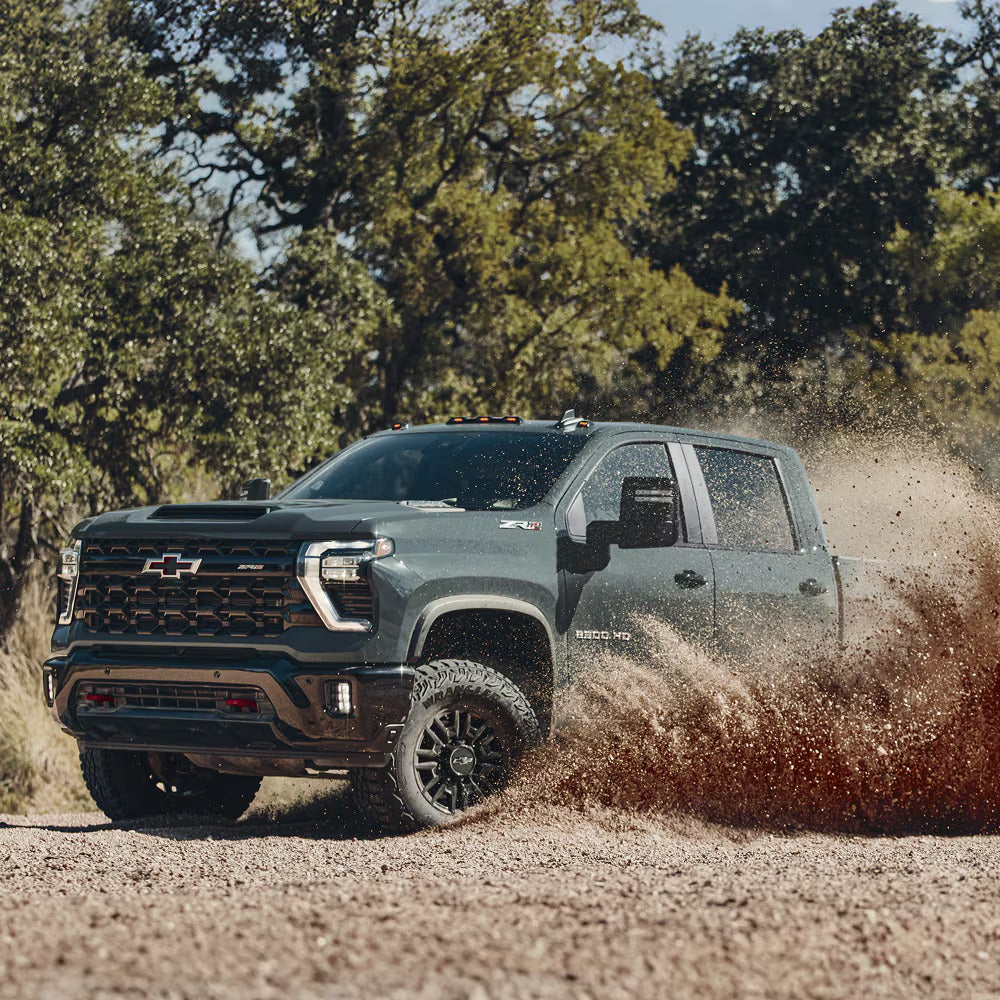
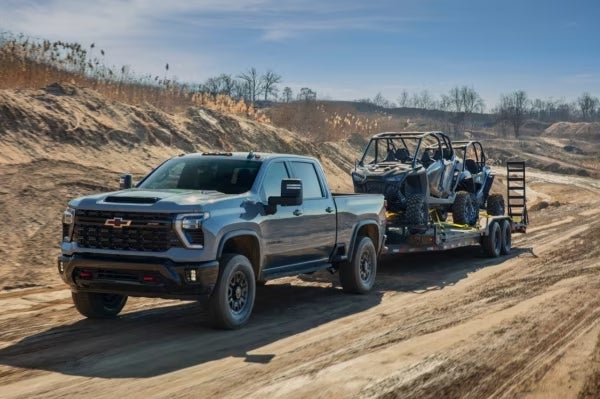
2026 Chevy Silverado 2500 HD

2026 Chevy Silverado 2500 vs. Ford F-250

If you're shopping for a heavy-duty work truck, the 2026 Chevy Silverado 2500 HD vs Ford F-250 is a comparison worth taking seriously. These two trucks have traded blows at the top of the HD segment for decades, and both bring genuine capability to the table. For drivers in Pasadena and the Greater Houston area who depend on a truck for towing or fleet work, picking the wrong one is an expensive lesson. Browse our current Silverado 2500 HD inventory at Monument Chevrolet to see what's in stock before you decide. This guide covers trims, specs, towing capacity, tech, and pricing so you can make a confident, informed choice. Getting to Know the 2026 Silverado 2500 HD: Trims, Features, and What Sets It Apart The 2026 Silverado 2500 HD gives buyers two engine choices: a 6.6L gasoline V8 producing 401 hp and 464 lb-ft of torque, and the available Duramax 6.6L Turbo-Diesel rated at 470 hp and 975 lb-ft. Both pair with a 10-speed automatic transmission. The gas engine supports conventional towing up to approximately 18,500 lbs when properly configured; the diesel pushes that figure to approximately 20,000 to 22,420 lbs depending on axle ratio, hitch type, and other configuration factors. Payload tops out around 4,081 lbs in well-equipped gas configurations. Worth noting: real-world towing depends heavily on your specific setup, and published maximums are rarely what you'll see in daily operation. The Silverado 2500 HD also stands out for its towing technology. An integrated trailer brake controller and Trailer Sway Control make managing heavy loads more intuitive, particularly for drivers who don't tow every day. Hitch View comes standard on upper trims, and you also get HD Surround Vision and a Bed View Camera for added situational awareness. Starting MSRP is $45,900 for the WT. Silverado 2500 HD Trim Lineup The Silverado 2500 HD offers six trims, giving buyers more entry points than the F-250's five-trim lineup, with 2WD availability across most configurations. Trim Starting MSRP Key Features Drive Options WT $45,900 Work-focused, durable flooring, 7-inch screen 2WD / 4WD Custom ~$53,000 Chrome appearance, 8-inch screen, remote start 2WD / 4WD LT ~$57,000 Cloth/leather seating, Teen Driver, wireless Apple CarPlay 2WD / 4WD LTZ ~$65,000 13.4-inch touchscreen, heated front seats, advanced safety 2WD / 4WD ZR2 ~$73,000 Multimatic DSSV dampers, front and rear e-lockers, 18-inch all-terrain tires 4WD High Country ~$75,000 Premium leather, head-up display, HD Surround Vision, Bed View Camera 2WD / 4WD Getting to Know the 2026 Ford F-250 Super Duty: Trims and Key Features The F-250 Super Duty is built around peak power output. The available 6.7L high-output Power Stroke diesel produces 500 hp and 1,200 lb-ft of torque, the highest diesel output figures in this comparison. Max gooseneck towing reaches up to 23,000 lbs when equipped with the HO diesel.. Payload peaks at approximately 4,246 lbs with the 7.3L gasoline engine. Those are genuinely strong numbers, and we won't downplay them. Ford also offers Pro Trailer Backup Assist and a 360-degree camera system as part of its towing tech package. The F-250 is available in multiple cab and bed configurations, and the Tremor off-road package adds lifted suspension and all-terrain tires for buyers who need capability beyond pavement. F-250 Super Duty Trim Lineup Trim Starting MSRP Key Features Drive Options XL $45,975 Work-ready basics, SYNC 4 2WD / 4WD XLT ~$49,175 Upgraded interior, Ford Co-Pilot360 2WD / 4WD Lariat ~$63,035 Leather seating, interior work surface option 2WD / 4WD King Ranch ~$78,075 Premium leather, ambient lighting, driver assist 4WD Platinum ~$78,965 Luxury interior, full advanced driver assistance 4WD Power, Performance, and Capability: How These Two Trucks Compare On paper, the F-250 holds the edge in peak diesel output and maximum towing capacity. The Power Stroke's 500 hp and 1,200 lb-ft top the Duramax's 470 hp and 975 lb-ft, and the F-250's reported max towing rating clears the Silverado 2500 HD's 22,420-lb ceiling in best-case configurations. Buyers deserve to know this upfront. Where the Silverado 2500 HD makes its case is in day-to-day refinement. The Duramax delivers smooth, linear torque that keeps heavy-duty hauling composed at highway speeds, which matters for Gulf Coast drivers working high-traffic routes with a loaded trailer. The suspension tuning also balances a comfortable unladen ride with the stability needed under load, while the F-250 tends to ride firmer, something you'll notice on lighter daily driving. The Silverado 2500 HD's six-trim structure and broad 2WD availability also give buyers more ways to right-size the truck for their actual work, rather than paying for capability they'll rarely use. Ready to see the Silverado 2500 HD up close? Browse our current inventory and check real-time availability in Pasadena. Towing, Payload, and Work-Site Utility Both trucks are competitive across typical commercial scenarios. Hauling construction equipment across Houston-metro job sites and trailering boats to Gulf Coast marinas are well within range for either platform. The Silverado 2500 HD's integrated towing tech earns attention beyond the raw numbers. Multiple trailer camera angles and responsive Trailer Sway Control reduce the mental load of managing a heavy rig, especially for operators who don't pull heavy loads daily. The F-250's Pro Trailer Backup Assist is a practical advantage for less-experienced drivers maneuvering in tight spaces. One important note: published towing and payload maximums require specific configurations, including the right engine, axle ratio, and hitch type. Real-world figures for both trucks typically run lower than the spec sheet, and that's true regardless of which one you buy. Interior Comfort, Technology, and Everyday Livability The Silverado 2500 HD's cabin delivers a strong technology package. The available 13.4-inch diagonal touchscreen runs Google built-in, and the 12.3-inch Driver Information Center keeps key data in the driver's line of sight. Wireless charging, Bose premium audio, and genuinely roomy rear seating in crew cab configurations make the Silverado 2500 HD workable for drivers splitting time between job sites and family use. The F-250's SYNC 4 system is capable, and higher trims offer a polished interior experience. The available fold-out interior work surface in certain configurations is a unique feature for buyers who regularly work from the cab. Both trucks provide solid infotainment options, though the Silverado 2500 HD's Google integration gives it an edge for real-time directions and app connectivity. Heavy-duty trucks above 8,500 lbs GVWR are not EPA-rated for fuel economy, so published MPG figures don't apply here. Diesel configurations on both platforms will outperform their gas counterparts on the highway, particularly for drivers logging consistent miles. Price, Fuel Efficiency, and Long-Term Value Starting MSRPs differ, with the Silverado 2500 HD WT at $45,900 and the F-250 XL at $45,975. The Silverado 2500 HD's six-trim progression and 2WD flexibility give buyers more options to control cost as they move up the lineup. Both trucks can climb steeply with diesel powertrain configurations and upper trim packages. The Duramax diesel's fuel efficiency advantage over the Power Stroke in real-world highway driving is worth considering for fleet buyers tracking operating costs over time. For Houston-area businesses running multiple trucks, those differences add up over a full year. Which Heavy-Duty Truck Is Right for Houston? After a close look at the 2026 Chevy Silverado 2500 HD vs Ford F-250, both are genuine contenders. The F-250 posts higher peak diesel output and a slightly higher maximum towing ceiling. If those top-end numbers are the deciding factor for your operation, that's a legitimate reason to go that direction. For most buyers in the Greater Houston area, though, the Silverado 2500 HD is the more well-rounded option: a refined Duramax Turbo-Diesel, a broader trim lineup with 2WD flexibility, proven towing technology, and a competitive starting price. It's built to perform on Gulf Coast hauling routes and Houston-area job sites day after day. Why Monument Chevrolet Is the Right Place to Buy We're a Chevrolet Business Elite Dealer, which means our commercial trucks department is purpose-built for fleet managers and business owners in Pasadena and across the Greater Houston region. We stock the full Silverado 2500 HD lineup, work directly with business accounts, and back every purchase with factory-trained service technicians and genuine OEM parts. Whether you're adding to a fleet or buying your first heavy-duty truck, our team is ready to help you find the right configuration for your work and your budget. Contact us today or stop by the dealership in Pasadena to take a Silverado 2500 HD out for a test drive. Image courtesy of Chevrolet

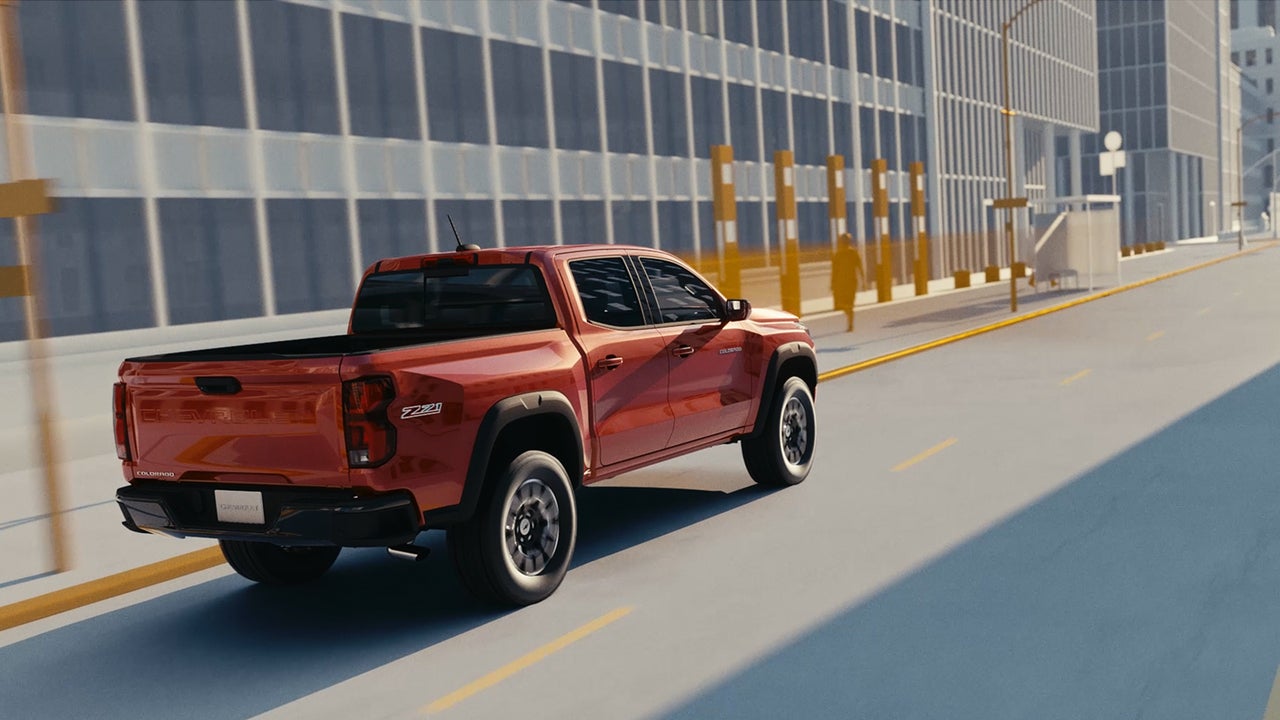
2026 Chevy Colorado

2026 Chevy Colorado vs. Ford Ranger

Choosing between midsize pickup trucks can feel overwhelming when both options bring serious capability to the table. The 2026 Ford Ranger vs Chevy Colorado comparison reveals two trucks that share a similar mission but take distinctly different approaches to conquering work sites, weekend adventures, and daily commutes. Understanding what sets these trucks apart helps you find the right match for your Houston-area driving needs. Both trucks have earned loyal followings, but they prioritize different strengths. The Chevy Colorado delivers consistent power across its entire lineup with a single, robust engine option, while the Ford Ranger offers variety with three different powertrains. When evaluating the Ford Ranger vs Chevrolet Colorado, consider how you'll actually use your truck. Will you tow heavy trailers regularly? Do weekend off-road trips define your downtime? Your answers shape which truck deserves a spot in your driveway. We invite you to browse our 2026 Chevy Colorado inventory to see current availability. 2026 Chevy Colorado: Exploring Every Trim Level The Colorado's five-trim lineup addresses diverse buyer needs from the work-focused WT to the adventure-ready ZR2. Each trim builds on a foundation of capability while adding specific features, so you're not paying for equipment you won't use. What stands out in the Chevy Colorado versus Ford Ranger lineup is the Colorado's consistency in powertrain choice. Every trim uses the same 2.7L TurboMax™ engine (310 hp / 430 lb-ft), which simplifies your decision process around features and capability packages rather than engine options. WT (Work Truck) The WT trim strips away extras and focuses entirely on getting work done. This base model delivers core truck capability with durable materials and straightforward functionality. Fleet managers appreciate the WT's reliability and practical design, which keeps maintenance simple and costs predictable. LT The LT adds comfort without compromising work ethic. Upgraded interior materials make daily driving more pleasant, while additional technology features enhance convenience. This trim attracts drivers who split time between professional use and personal adventures. Trail Boss The Trail Boss targets weekend warriors who need off-road capability but don't want to sacrifice everyday drivability. Factory-installed all-terrain tires and a 2-inch lift give clearance to handle rough trails. Multiple drive modes adapt to varying terrain. This trim comes ready for adventure straight from the dealership, eliminating the need for aftermarket modifications. Z71 The Z71 refines the off-road formula with a more polished interior while maintaining serious trail credentials. Skid plates protect vital components when you venture off pavement, and the specially tuned suspension absorbs impacts. This trim handles everything from commuting to camping trips with equal confidence. ZR2 The ZR2 represents the peak of Colorado's capability pyramid. Multimatic DSSV dampers provide exceptional control over rough terrain, while 10.73 inches of ground clearance and standard skid plates protect against obstacles. For even more capability, the available ZR2 Bison package, developed with American Expedition Vehicles, adds five Boron steel skid plates and pushes ground clearance to 12.2 inches. When comparing which is better Ford Ranger or Chevy Colorado for extreme off-roading, the ZR2's advanced suspension technology demands serious consideration. 2026 Ford Ranger: A Look at the Lineup Ford takes a streamlined approach with the Ranger's four-trim structure. This simplified lineup makes comparisons easier while still covering the spectrum from basic work truck to high-performance off-road machine. The Ranger's variety comes through engine choices rather than an extended trim list. The Raptor trim showcases Ford's commitment to high-speed desert running, a specialty that distinguishes it within the Ford Ranger vs Chevrolet Colorado specs conversation. XL The XL delivers basic truck functionality at an accessible price point. This entry-level model focuses on essential features without extras that inflate costs. The XL's 2.3L EcoBoost® engine (270 hp / 310 lb-ft) provides adequate power for light-duty work. XLT The XLT brings more comfort and technology into the Ranger experience. Extra convenience features make the XLT suitable for drivers who use their truck for work and family duties. An optional 2.7L V6 (315 hp / 400 lb-ft) provides additional power when needed. Lariat The Lariat elevates the Ranger with premium materials and advanced technology. Higher-quality interior surfaces and expanded infotainment options create a more refined experience. This trim demonstrates that capable trucks can deliver upscale experiences without losing their essential character. Raptor The Raptor stands apart as a purpose-built performance machine designed for aggressive off-road driving. A 3.0L twin-turbo engine (405 hp / 430 lb-ft) delivers exceptional power, though towing capacity drops to 5,510 pounds. Enhanced suspension components and specialized terrain management systems let the Raptor attack trails at speeds that would overwhelm standard trucks. Engine Performance and Towing Capacity Compared Under the hood, these trucks reveal fundamental differences in their engineering philosophies. The 2026 Chevy Colorado standardizes its approach with a single 2.7L TurboMax™ engine delivering 310 horsepower and a class-leading 430 lb-ft of torque across every trim. This consistency means every Colorado driver experiences the same strong pull whether they chose the base WT or the adventure-focused ZR2. Category 2026 Chevy Colorado 2026 Ford Ranger Standard Engine 2.7L TurboMax™ (310 hp / 430 lb-ft) 2.3L EcoBoost® (270 hp / 310 lb-ft) Max Horsepower 310 hp 405 hp (Raptor 3.0L) Max Torque 430 lb-ft 430 lb-ft (Raptor 3.0L only) Transmission 8-speed automatic 10-speed automatic Max Towing 7,700 lbs 7,500 lbs (XL/XLT/Lariat); 5,510 lbs (Raptor) Max Payload 1,710 lbs 1,767 lbs Ford's Ranger takes a different path with three engine options. The most powerful configuration lives in the Raptor, where a 3.0L V6 cranks out 405 horsepower while matching the Colorado's 430 lb-ft torque figure. However, the Ranger tops out at 7,500 pounds of towing capacity, falling 200 pounds short of the Colorado's maximum. These numbers matter when hauling a loaded trailer to Galveston Bay. That 200-pound difference represents camping gear, tools, or supplies that could push you over the Ranger's limit while staying safely within the Colorado's capacity. The Colorado's torque advantage at lower RPMs also translates to less strain when climbing grades with heavy loads. Fuel Economy and Ownership Value The Chevrolet Colorado vs Ford Ranger reviews often highlight fuel economy as an area where the Ranger gains ground. Ford's base 2.3L engine delivers 21/25 mpg (city/highway) in RWD configuration, which adds up for high-mileage drivers covering Houston's extensive commute routes. However, fuel economy tells only part of the ownership story. The Colorado's superior towing and payload capacities create value for buyers who regularly push their truck's limits. Spending slightly more on fuel makes sense when your truck handles loads that would exceed a competitor's ratings. Both trucks offer competitive warranty coverage that protects your investment. The deciding factor often comes down to actual usage patterns. Light-duty daily driving favors the Ranger's efficiency, while regular towing or heavy payload hauling tips the scales toward the Colorado's robust capability. Interior Space, Technology, and Safety Features Step inside the 2026 Chevy Colorado and you'll find a cabin that prioritizes both space and technology. The standard 11.3-inch touchscreen dominates the dashboard, integrating Google Built-In for seamless connectivity and navigation. This system responds quickly to inputs and mirrors many smartphone functions without requiring phone integration. The Ford Ranger vs Chevy Colorado size comparison extends beyond exterior dimensions into cabin space. The Colorado's interior design maximizes usable space through smart packaging. Storage cubbies appear where you need them, and control placement feels intuitive. The Ranger features a smaller standard touchscreen and takes a more utilitarian approach to interior layout. Safety technology increasingly defines modern trucks, and both manufacturers equip their vehicles with advanced driver-assistance features. The Colorado's comprehensive suite of safety systems often receives praise in Chevrolet Colorado vs Ford Ranger reviews for its integration and effectiveness. Both trucks provide peace of mind through technology that helps prevent accidents, but the Colorado's more extensive standard equipment gives it an edge. 2026 Ford Ranger vs. Chevy Colorado: Which Mid-Size Truck Wins for Houston Drivers? Houston area drivers face unique demands that influence the Ford Ranger versus Chevy Colorado decision. Towing boats to Galveston, navigating congested freeways along I-45, and occasionally venturing to Hill Country trails all factor into choosing the right truck. The Colorado excels when towing capacity and consistent power matter most. Its 7,700-pound rating handles larger trailers, and the single engine option means every Colorado delivers the same strong performance. Your choice ultimately depends on how you'll use your truck daily. Frequent towing or heavy hauling points toward the Colorado's superior capacity. When comparing Chevy Colorado vs Ford Ranger reliability, both trucks deliver solid build quality backed by comprehensive warranties. Focus instead on capability matching your real-world requirements. We believe the Colorado prioritizes towing capacity and standardized power delivery in ways that benefit Houston-area drivers who regularly haul equipment to construction sites or tow trailers. Test Drive the 2026 Chevy Colorado at Monument Chevrolet in Pasadena Reading specifications only tells part of the story when choosing between these capable trucks. Experiencing the Colorado firsthand reveals how its features translate to real-world driving. We welcome Houston area drivers to test the Colorado's capabilities on familiar roads. Our family-owned dealership has served the Greater Houston region for over 50 years, building trust through transparency and straightforward service. Our campus-style layout makes visiting easy, with separate buildings for sales, service, and parts creating a stress-free environment. You'll experience the Colorado's towing capacity, interior comfort, and technology features during an unhurried test drive. Our team helps you explore how the Colorado stacks up against the Ranger based on your specific needs rather than pushing features you won't use. We offer straightforward pricing with no hidden fees, reflecting our commitment to honest dealings. Personalized financing options help secure terms that fit your budget whether you're buying or leasing. Our certified service center stands ready to maintain your Colorado with factory-trained technicians and genuine parts. Visit us in Pasadena to discover why the Colorado's combination of power, technology, and versatility makes it a compelling choice in the midsize truck segment. Contact our team to schedule your test drive and see how the Colorado handles real Houston driving conditions. Image courtesy of Chevrolet

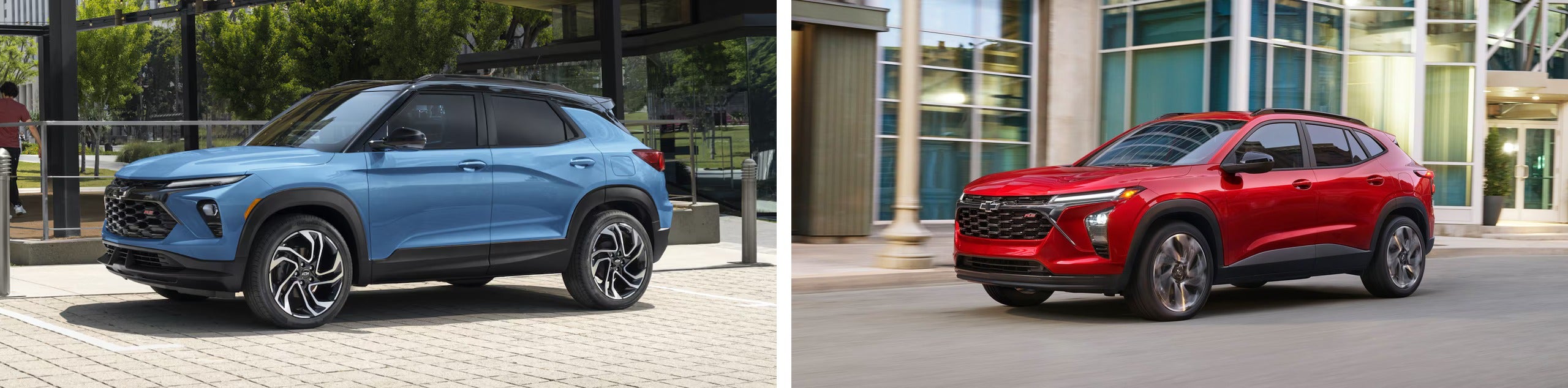
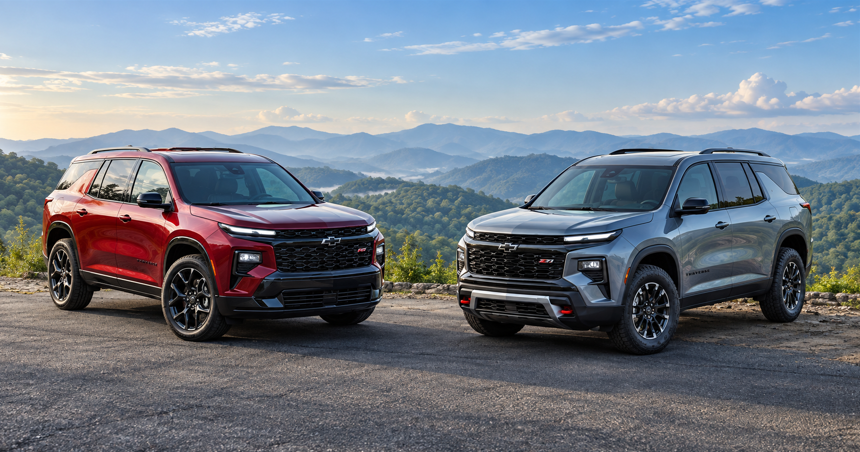
Side by side images of the 2026 Chevy Trax and the 2026 Chevy Trailblazer

2026 Chevy Trax vs. Trailblazer

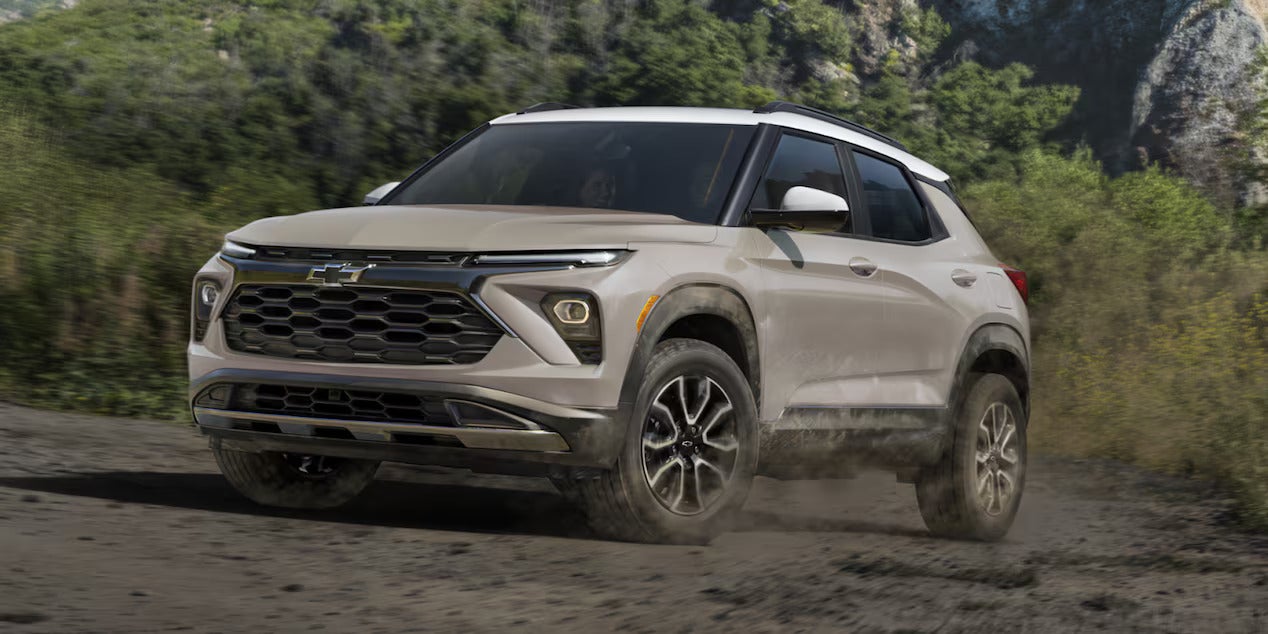
The 2026 Chevrolet Trax and Trailblazer command attention for compact crossover shoppers. With feature-rich technology, spacious interiors, and eye-catching styling, it is no surprise that Pasadena drivers considering a new SUV are exploring Chevrolet Trax vs. Chevrolet Trailblazer reviews. If you are considering investing in a fuel-efficient SUV, which one is right for you? Our team at Monument Chevrolet shares the key differences between the Chevy Trax and Trailblazer to help you make an informed decision. Chevy Midsize SUVs Size and Dimensions: Which Chevy SUV is Bigger? Despite the Trax being the newer model, it is the longer vehicle, measuring 178.6 inches compared to the Trailblazer's 174.07 inches. The 2026 Chevy Trailblazer is wider and taller, offering a commanding SUV road presence. Featuring a lower roofline, the Trax delivers the feel of a lifted hatchback. In contrast, the Trailblazer's upright SUV stance can provide better outward visibility for many drivers. Both vehicles offer almost identical maximum cargo capacities behind the front seats. The Trailblazer provides a marginal edge at 54.4 cubic feet versus the Trax's 54.1 cubic feet. Behind the second row, the Trax provides 25.6 cubic feet of cargo space, while the Trailblazer offers 25.3 cubic feet. This marginal advantage in space behind the rear seats provides more room for groceries or gear without having to fold anything down. The Trailblazer delivers slightly more front headroom, 39.98 inches compared with 39.6 inches in the Trax, and rear legroom of 39.0 inches versus 38.7 inches, making it marginally more comfortable for back-seat passengers. Meanwhile, the Trax provides a more stretched-out feel for the driver with 41.9 inches of front legroom, ideal for taller front occupants. Engine Performance and Fuel Economy The powertrain choice between the 2026 Trax and Trailblazer directly impacts your driving experience and wallet. The 2026 Chevrolet Trax offers a single powertrain. It pairs a 1.2-liter Ecotec turbo engine with a six-speed automatic transmission. This setup delivers 137 horsepower and 162 pound-feet of torque, with power sent only to the front wheels. Engineered for maximum efficiency, This focus on efficiency, the front-wheel-drive configuration yields an EPA-estimated 28 mpg in the city and 32 mpg on the highway. You benefit from fewer refills and reduced gasoline bills with this zesty mid-size SUV. The Trailblazer offers a choice, starting with the same 1.2-liter engine but also providing an optional 1.3-liter Ecotec turbo engine. The larger engine boosts output to 155 horsepower and 174 pound-feet of torque. This power boost provides quicker acceleration and more confidence for highway merging. The Trailblazer is the only one of the two SUVs to offer an all-wheel-drive system paired with a nine-speed automatic and continuously variable transmission for the front-wheel-drive models. All-wheel drive is beneficial for drivers in wet climates who need enhanced traction and stability. Interior Design, Comfort, and Materials When considering the 2026 Chevrolet Trax vs. Chevrolet Trailblazer specs, the interior distinctly separates the two models. The 2026 Trax features a driver-focused cockpit with a lower, sleeker dashboard. This design highlights its sporty feel. All the controls are intuitively placed which enhances your driving experience. Material quality includes standard cloth upholstery and available Evotex and cloth mixtures on higher trims, with sporty yellow accents or red stitching depending on the trim. The Trailblazer features a premium SUV interior with cargo versatility, and chrome accents enhance the Jet Black interior with red-accent or yellow stitching on upper trim levels. It comes standard with a fold-flat front passenger seat, a feature absent in the Trax. This allows the Trailblazer to accommodate items up to 8.5 feet long, leveraging its 40/60 split-folding rear bench seat to create a continuous, flat-load floor. This unique seating feature provides unparalleled flexibility. It makes it easy to transport long items such as skis or lumber without a roof rack. While both models offer comfortable seating for five, the Trailblazer's boxier shape offers a roomy feel that some passengers may find especially accommodating. Technology Features and Infotainment The Trax features a standard 8-inch infotainment system on the two base trims. Chevrolet elevates its cabin on top trims with an 11-inch diagonal HD color touchscreen paired with an 8-inch digital driver information center. Wireless Apple CarPlay, Android Auto, an optional Wi-Fi hotspot, and a wireless phone charger are available. The Trailblazer matches this offering with a standard 11-inch diagonal touchscreen, an 8-inch digital gauge cluster across the lineup, a Wi-Fi hotspot, and two USB data ports. Both systems run on Chevrolet's intuitive Infotainment 3 platform, providing comparable functionality. The key difference is that the Trailblazer makes the large 11-inch screen more widely available and offers a premium Bose seven-speaker audio system on its higher trims. Safety matters to every Pasadena commuter, and Chevrolet equips both the Trax and Trailblazer with intuitive driver-assist technologies. Each model includes Chevy Safety Assist as standard, delivering key features such as lane keep assist, forward collision alert, high beam assist, and automatic emergency braking. Best Use Cases for the Trax The Chevrolet Trax is the ideal choice for the budget-conscious urban commuter seeking maximum value and style. With a starting MSRP of about $21,600, the Trax offers a lower entry point and superior fuel economy. Its streamlined front-wheel-drive-only configuration and sleek profile suit city driving and highway cruising where all-weather capability is not a primary concern. The Trax delivers a modern, tech-forward cabin and generous passenger space, appealing to drivers who prioritize a sporty aesthetic and a feature-rich experience over maximum utility. Best Use Cases for the Trailblazer With a starting price of $23,200, the Chevy Trailblazer earns its slight premium by offering available all-wheel drive and the stronger 155-horsepower 1.3-liter engine. This combination makes this full-sized SUV well-equipped for tricky weather and light off-road routes. Its upright SUV design and fold-flat front passenger seat also provide impressive cargo versatility. Altogether, the 2026 Trailblazer is a smart fit for small families and active lifestyles that demand a durable, adaptable vehicle for everyday driving and weekend getaways. Shop New Chevy SUVs at Monument Chevrolet If you are in the market for a dynamic compact crossover with generous tech and safety features, an attractive price tag, and a spacious cabin, which Chevy will you choose: the 2026 Chevy Trax or Trailblazer? Shedule a test drive at our Chevy dealership near Houston today to experience these popular rides firsthand. New Chevy Vehicles Trax and Trailblazer courtesy of Chevrolet

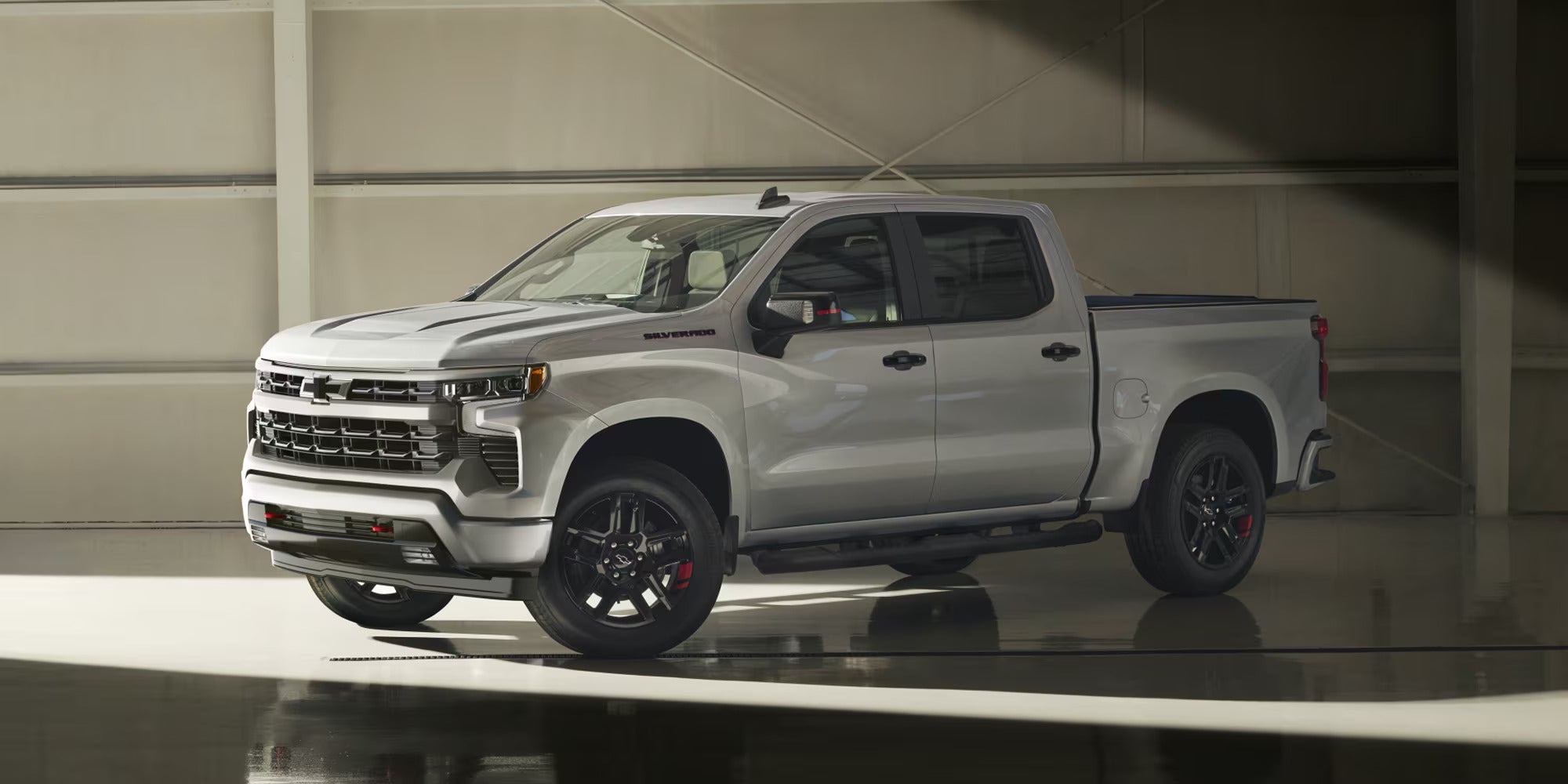
2026 Chevy Silverado

2026 Chevy Silverado vs. GMC Sierra Comparison for Houston Drivers

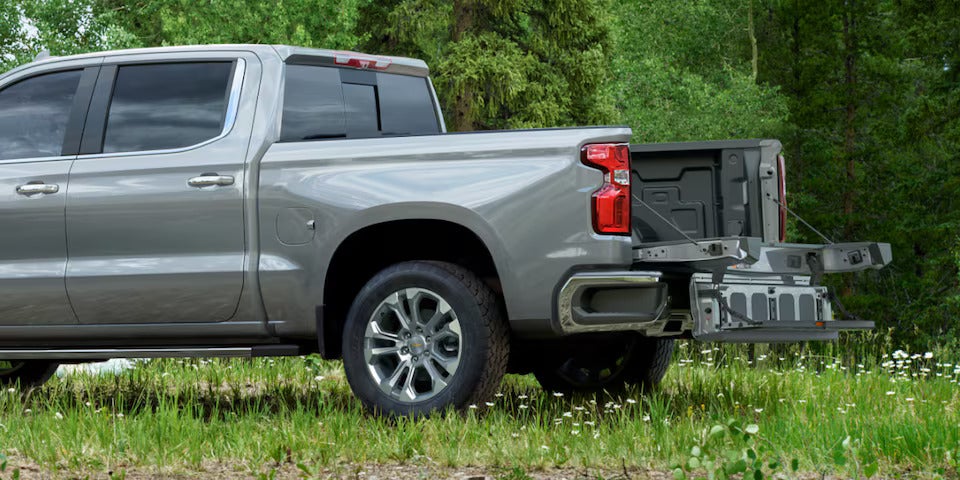
Big pickup trucks are a Texas staple, and most buyers expect a truck that perfectly combines capability with comfort. So, if you're shopping for a new truck in Houston, that usually means comparing the latest Silverado and Sierra. Our team at Monument Chevrolet breaks down what sets these pickups apart and which makes more sense for you. New Silverado 1500 for Sale Engine Performance and Capability Comparison Every truck shopper wants solid engine choices. The standard engine on both is a turbo 2.7-liter four-cylinder, good for 310 horsepower and 420 pound-feet of torque. Paired with an eight-speed transmission, this engine moves the truck from 0 to 60 mph in about 7.1 seconds. That setup balances decent muscle with solid gas mileage for anyone who doesn't need V-8 grunt every day. Still, plenty of drivers in Texas are after something beefier. For that crowd, both trucks offer a 5.3-liter V8 with 355 horsepower and 383 pound-feet, mated to a 10-speed automatic. You'll see the 0-60 mph dash in about 6.4 seconds, which is quick for a big pickup that can haul a load. If you're after pure grunt, there's a 6.2-liter V8 with 420 horsepower and 460 pound-feet of torque at the top end. If diesel fits your needs better, try the Duramax 3.0-liter inline-six. It's got 305 horsepower and 495 pound-feet of torque. EPA figures show these diesels can hit up to 29 mpg on the highway, making them among the most efficient full-size trucks you can buy right now. Acceleration times with the diesel differ by a hair (7.6 seconds to 60 mph in the Silverado and 7.4 in the Sierra), but you'll barely notice the difference on Texas roads. Towing and Hauling Capabilities Trucks in Texas work for a living. For many buyers, towing and hauling are major selling points. The Silverado and the Sierra can tow up to 13,300 pounds if you pick the right engine and setup. That's on par with best-in-class strength and makes them perfect for hauling your fishing boat for a weekend getaway at Lake Conroe or pulling a big trailer on State Highway 288. The Silverado gives you up to 2,280 pounds for payload, while the Sierra tops out at 2,200 pounds. Where you might notice a difference is in the bed technology. The Sierra is known for its rugged carbon-fiber cargo box. It's lighter than steel but tougher than nails. Sierra also sports the exclusive MultiPro tailgate, letting you fold, step, or extend as needed. Silverado boasts the Multi-Flex tailgate, which basically gives you similar functions. If you plan to carry heavy tools or load up with stone or lumber for a big Dallas build, it might tip the scales in GMC's favor, but for many Texas drivers, this is a nice-to-have, not a must. Interior Features and Technology These new pickups start to look different once you open the door. Base Silverados come simple: vinyl seats, crank windows, and a few extras. That's ideal if you're after value or want a rig that's easy to keep clean after fishing trips at Lake Conroe. But move up even one trim and things get pretty nice: The Silverado LT and above get you a 12.3-inch digital dash and a 13.4-inch touch screen with wireless Apple CarPlay and Android Auto. Voice assistant is now standard, and you can even use Amazon Alexa. The Sierra, on the other hand, leans heavily into comfort, especially in pricier models. Even mid-level SLE models have the big digital cluster, and fancy trims like the Denali Ultimate boast massaging front seats, open-pore wood, premium leather, and a high-end head-up display. GMC trucks still work hard, but you might forget that from inside the fancy cabin, especially once you switch on the cooled seats in 100-degree Houston sun. The Sierra and Silverado's infotainment systems are quick and easy to use, with big icons and clear menus. Premium models offer a Bose 12-speaker stereo and wireless charging. So, do you want value and simplicity or lots of plush extras? Both choices are solid. You just have to decide what fits your lifestyle. Texas-Specific Buying Considerations Many Texans want their truck to handle more than just highway driving. Summer in Houston is hot and muggy, and downpours can show up fast. Chevy and GMC both get this. Their air conditioning is strong enough to cool down a cabin blazing in the midday sun, and the available 4WD setups give you grip when sudden rain makes the roads slick. Both trucks also offer off-road models. The Silverado Trail Boss and ZR2 come ready with lifted suspensions and all-terrain tires. The Trail Boss even gives you a two-inch factory lift, helping you clear muddy fields or rough work lots in East Texas. Shop Silverado at Monument Chevrolet Both choices come ready for tough Texas jobs and family adventures. But if you want to see the Silverado up close, which we believe is the superior choice, stop by our Chevy dealership near Houston or call us. Our team is here with answers, flexible auto financing, and a big selection of new and used trucks to help you make a confident purchase. New Chevy Vehicles Image courtesy of Chevrolet

New Silverado truck

New vs. Used Car Buying in Houston

If you're buying a car in Pasadena, you're spoilt for choice. With its growing suburbs and a wider range of vehicles hitting the market, you might wonder whether to buy a new Chevy vehicle or a used car. Covering everything from local tax perks to emission rules, this guide will help you make your purchasing decision. Benefits of Buying New Local Houston-area dealerships often offer strong incentives and low-interest or 0% financing on new models. Here are other benefits of buying a new car: Hybrid and fuel-efficient models help you save on rising fuel costs and reduce environmental impact. New smart tech integrations include many infotainment systems that support smartphone sync, voice commands, and over-the-air updates. Many advanced safety features, like automatic emergency braking and adaptive cruise control, are standard in 2025 cars. Benefits of Buying Used One of the biggest advantages of buying a used car is its slow depreciation, preserving its value. Other benefits include: Used cars are often priced much lower than brand-new ones and can fit better into your budget. Spending less on things like insurance and registration lowers the overall cost of ownership. Gives you access to a wider range of vehicle options, like high-end models with premium features at a lower price point. Texas-Specific Considerations for Car Buyers There are a few considerations when you're buying a car in Texas. The climate, differences between city and country living, and specific inspection requirements are all important considerations. Climate Impact on Vehicle Choice and Longevity Texas weather can be tough on cars. The blazing summer heat puts extra strain on your car's cooling system, tires, and battery. Batteries wear out faster in high temperatures, and poorly maintained tires are more likely to blow out on hot roads. That's why many Texans look for vehicles with reliable air conditioning and sturdy tires. Trucks and SUVs with good cooling capacity often last longer under these conditions. Extreme weather like storms or flash floods in Texas can demand vehicles with more stability and advanced safety features, along with all-wheel drive. Urban vs. Rural Driving Needs Across Texas Texas has massive cities and equally vast stretches of rural land. In Houston, traffic is heavy and parking spaces can be limited. You can opt for smaller, fuel-efficient cars that are well-suited for city driving and parking. Rural buyers can lean toward trucks and SUVs that are durable for rougher terrain, hauling, and outdoor activities. Larger vehicles with better mileage on highways, firmer suspensions, and more cargo space are practical. State Inspection and Emissions Requirements Another important factor for Texas car buyers is the state inspection system. If you're buying a gasoline-powered car aged two to 24 years and stay in counties like Dallas, Harris, and Travis, you need to get an annual vehicle emissions testing and safety inspection. New vehicles under two years and those older than 24 years, diesel-powered, and electric vehicles are exempt. Complete Cost Comparison: New vs. Used Consider a few factors before making a purchasing decision between a new and used car: Insurance Cost Differences Full-coverage car insurance often costs more for new cars, depending on the vehicle's age and model. They often come with higher insurance premiums because they're packed with advanced technology and safety features, which are more expensive to repair. Choosing a used car can mean lower premiums, since its value has already depreciated. It rarely has as many high-tech parts that cost a lot to fix, either. Insurance premiums can differ depending on personal factors like age, driving history, and coverage level chosen. Maintenance and Repair Expenses New cars come with manufacturer warranties that cover major repairs for a specified period or mileage. You don't have to incur high initial maintenance costs. With a used car, repair costs may add up over time. This is because of their expired or limited warranty coverage. You may also note that the parts and labor for older models cost less. Older used vehicles often require more repairs as they age. New cars can be costly to fix as well, mainly because of the high-tech components. Fortunately, many certified pre-owned vehicles offer extended warranties to give you peace of mind. Warranty Coverage Comparison New cars often come with comprehensive manufacturer warranties. This includes bumper-to-bumper coverage for three to five years or a set mileage, like 36,000 to 60,000 miles. Used cars from certified pre-owned programs may have limited warranties or extended warranty options. Once a new car's warranty ends, all repair costs fall entirely on the owner. That's why warranty coverage plays a big role in how much you'll actually spend on a car during the first few years. Making Your Final Decision: New vs. Used Deciding between a new and a used car depends on your preferences. If having the most modern technology, enhanced safety features, and warranties gives you peace of mind, and you're willing to pay more upfront, then a new car is worth the cost. Coupled with low-interest financing options and the Big Beautiful Bill tax credit, these will lessen your financial woes in the short term. If your focus is on upfront affordability and long-term savings on insurance, buying a used car makes more sense. Shop New and Used Cars Ready to find your perfect vehicle? Whether you lean toward a brand-new model or a quality pre-owned car, Monument Chevrolet has a wide selection to fit your driving needs. Contact us today or visit our Chevy dealership near Houston to test drive your next car. Image courtesy of Chevrolet

2025 Chevy Trailblazer

2025 Chevrolet Trailblazer vs. Toyota RAV4 Comparison

The Chevrolet Trailblazer and Toyota RAV4 are crossover SUVs that cater to different needs. While the Trailblazer prioritizes efficiency both in its size and engine performance, the RAV4 offers more space. Both vehicles are great choices depending on your specific requirements, so it's well worth considering what you prioritize in your next car purchase. At Monument Chevrolet in Pasadena, Texas, we took a closer look at these two vehicles to help you do just that. Feel free to reach out if you have any questions or to learn more. Performance and Efficiency Chevy offers the Trailblazer with two engine options. The first is a 1.2L turbocharged three-cylinder unit that can pump out 137 horsepower and 162 lb-ft of torque. For a little bit more power, you can opt for a 1.3L turbocharged three-cylinder unit with 155 horsepower and 174 lb-ft of torque. Both engines provide good fuel economy for an SUV. The base engine achieves 30 mpg in the city and 31 mpg on the highway, while the slightly larger engine is good for 29 mpg on city roads and 33 mpg at highway speeds. If you opt for all-wheel drive (AWD), gas mileage drops slightly to 26 mpg in the city and 29 mpg on the highway. The RAV4 offers more potency, but it's important to keep in mind that it's a bigger vehicle. Gas-powered RAV4s have a 2.5L four-cylinder engine that produces 203 horsepower and 184 lb-ft of torque. Gas mileage is up to 35 mpg on the highway with front-wheel drive, but it drops as low as 25 mpg in the city with AWD. The RAV4 can tow up to 1,500 pounds, while the Trailblazer isn't designed for towing. There are plenty of options in the Chevy lineup if you prefer a vehicle with comparable capabilities to the RAV4, including the Chevrolet Equinox. Comfort and Interior Features Both crossovers can accommodate up to five people across two rows of seating. The Toyota RAV4 size is larger than the Trailblazer, boasting about 37 cubic feet of cargo storage at the rear when the second row of seats is in use. By contrast, the Trailblazer offers a still roomy 25 cubic feet, which should be more than enough for a load of groceries or transporting your daily cargo needs. When you fold down the rear row, you can transport up to 54 cubic feet of cargo in the Chevrolet Trailblazer and about 69 cubic feet in the RAV4. The base setup in the Trailblazer features cloth upholstery and manually adjustable front seats. Synthetic leather seats and power adjustments for the driver are available as you move up through the trims. As for the RAV4, it boasts cloth upholstery and power-adjustable front seats. In addition, the RAV4 has a 60/40-split folding rear seat. As you go up the trim levels, you can access more upscale features, including leather seats for added comfort. Overall, both cabins offer a relaxing driving experience, whether you spend most of your time on the daily commute or longer highway drives. Infotainment Technology There's not much to choose between these two vehicles when it comes to infotainment features. The Trailblazer has an 11-inch touch screen throughout the lineup and a four-speaker stereo in its base trim. The RAV4's infotainment equipment includes an 8-inch touch screen and a six-speaker stereo. Each crossover has a comparably sized digital instrument display so you can monitor your vehicle's performance. They also feature wireless Apple CarPlay and Android Auto and a Wi-Fi hot spot. Safety Features Toyota and Chevrolet have equipped these vehicles with plenty of cutting-edge safety tech to help you avoid accidents on the road. These include forward collision warning, automatic emergency braking, and lane departure warning. The Trailblazer benefits from Buckle to Drive, Chevy's safety feature that prevents your vehicle from setting off until you fasten your seatbelt. The RAV4’s standout features include Toyota Safety Connect, which gives you access to roadside assistance and other features, and traffic sign recognition, which alerts you to common driving rules. If you choose the Trailblazer, you'll have rear parking sensors to make it easier to maneuver in and out of a tight spot, and you can add safety features such as adaptive cruise control and blind-spot monitoring. The RAV4 offers optional add-ons such as hill-descent control and rain-sensing windshield wipers. The surround-view parking camera gives you an aerial view of your vehicle to spot hazards from all angles as you find your perfect parking position. Pricing and Trim Levels The Trailblazer has a clear advantage when it comes to price, coming in at about $4,000 cheaper than the RAV4 in their respective base trims. The Trailblazer LS starts at less than $29,490, while the RAV4 LE starts at around $29,250. If you're shopping on a budget and don't need the extra space in the RAV4, the Trailblazer is your best choice. There are four trims offered in the Trailblazer. In addition to the base LS option, you can choose the LT, ACTIV, and RS trims. The ACTIV and RS trims are designed for adventures off the beaten track or a sportier ride, respectively. Standout trims in the RAV4 lineup include the XLE Premium, which has synthetic leather upholstery and a starting price of around $33,000. The Limited trim starts at around $37,000 and features a 10.5-inch touch screen and a 12.3-inch digital gauge cluster. Test-Drive the 2025 Trailblazer at Monument Chevrolet in Pasadena Both vehicles have many positives. But the Trailblazer excels in value for money and handling on busy city roads. If you want to test-drive a 2025 Trailblazer or explore other midsize SUVs in Chevy's exciting lineup, don't hesitate to reach out to us today. Our team of Chevy experts will be happy to help guide you through the purchase process right here at Monument Chevrolet. New Chevy Trailblazer Image courtesy of Chevrolet

2025 Chevrolet Tahoe SUV

2025 Chevrolet Tahoe vs. GMC Yukon

The 2025 Chevrolet Tahoe and GMC Yukon are excellent choices in the full-size SUV class. Both share the same General Motors platform but have similar dimensions and engine options. However, each appeals to a unique crowd. The Tahoe is a more affordable option with a contemporary look and useful features. The Yukon includes luxury trims like the Denali and high-tech additions such as night vision. Below is a comparison of the Tahoe vs. the Yukon to help you make an informed purchase decision. 2025 Tahoe vs. Yukon: A Comparison Here's a comprehensive comparison of the 2025 Chevrolet Tahoe and GMC Yukon. Pricing The 2025 Chevrolet Tahoe has six trim levels — the LS, LT, RST, Z71, Premier, and High Country; the 2025 GMC Yukon offers five choices — the Elevation, AT4, AT4 Ultimate, Denali, and Denali Ultimate trims. The starting MSRP for the 2025 Tahoe LS is $59,000, with its top trim, the High Country, starting at $78,700. This pricing makes the Tahoe a more accessible option if you're looking for a full-size SUV without breaking the bank. The Yukon starts at a higher price point of $68,895, and its high-end trims, such as the Denali Ultimate, can exceed $103,295. It does have a premium offering that might justify the higher cost for some buyers. Reliability According to the J.D. Power reliability ratings, the Chevrolet Tahoe has a slight edge, with an assessment score of 82 compared to the Yukon's 78. This difference between Yukon and Tahoe is subtle but could be important if you prioritize affordability and dependability. Safety ratings are the same, with both achieving four stars from the National Highway Traffic Safety Administration. The two feature comparable advanced driver-assistance technologies. Interior Space The Tahoe provides a more budget-friendly option without sacrificing comfort. It can seat up to nine passengers, depending on the configuration. It provides standard bench seats or optional captain's chairs in the second row for flexibility for larger families. The Tahoe offers up to 122.7 cubic feet of cargo space with both rear rows folded down. This capacity makes it one of the largest vehicles in its class. Behind the third row, there is approximately 25.5 cubic feet of space available. The Yukon provides seating for up to eight passengers, depending on the configuration, and options for second-row executive seating that includes heated and ventilated captain's chairs with a massaging feature, delivering a first-class experience for passengers. The standard Yukon offers ample cargo space, but the Yukon XL provides even more, with 41.5 cubic feet behind the third row and up to 144.7 cubic feet with the seats folded down, Interior Design The 2025 Chevrolet Tahoe raises the bar for full-size SUVs with a revamped interior. The cabin is roomier, with lower dashboard lines and well-designed details. Piano Black and Galvano chrome finishes add a premium feel. The top-tier trim, the High Country, provides real wood details and wingtip perforated leather seats in a bold Jet Black/Mocha color combination. The RST trim introduces sporty Victory Red stitching, and Premier has a sophisticated Jet Black/Sky Cool Gray combination. The GMC Yukon has a luxurious cabin with premium materials and a more sophisticated look. It has full-grain leather seating surfaces on trims such as the Denali Ultimate and AT4 Ultimate. It features a power-sliding center console with open storage for easy reach of personal items. You also get plenty of door storage space and roomy passenger and cargo space. Technology Both vehicles feature advanced technology. The Chevrolet Tahoe has an impressive 17.7-inch infotainment screen angled toward the driver and an 11-inch digital instrument cluster. The GMC Yukon boasts flagship-level technology, including advanced towing features such as a transparent trailer view. The interior has a 16.8-inch diagonal infotainment system featuring a customizable interface and Google built-in compatibility. It also includes a digital 11-inch Driver Information Centre and a multicolor 15-inch Head-Up Display on top trims. Performance The 2025 Chevrolet Tahoe combines rugged performance with refined handling. It offers three powerful engine options: a standard 355-hp 5.3L V-8, a robust 420-hp 6.2L V-8, or an efficient 305-hp Duramax diesel engine. Each is paired with a smooth-shifting 10-speed automatic transmission. Rear-wheel drive is standard, but all-wheel drive is available for those tackling tougher terrains or slippery conditions. If you're an adventurer, the off-road-oriented Z71 trim features all-terrain tires, underbody protection, and an air suspension system that adjusts ride height for obstacles. The RST Performance Edition has sport-oriented additions like Brembo brakes, a lowered chassis, and a steering system fine-tuned for performance. The Yukon has three available engines: the 5.3L EcoTec3 V-8, 6.2L V-8, and 3.0L Duramax Turbo-Diesel. The 10-speed automatic transmission accompanies all the available engine options with smooth shifts and peak performance regardless of the driving conditions. Towing Capacity Both SUVs have the same maximum towing capacity of 8,400 pounds with their base 5.3L V-8 engine. The Tahoe takes a slight lead with a greater towing capacity for its 6.2L V-8 and diesel powertrains. Both the Tahoe and the Yukon include advanced trailering tech for heavy-duty towing. Fuel Efficiency The Yukon and Tahoe achieve similar fuel economy across their engines, but the Tahoe gains an edge with the diesel model, which attains a rating of 24 mpg combined compared to the Yukon's 23 mpg. Regarding fuel economy, the Tahoe gives marginally better returns in the long term. Safety Features Both SUVs feature basic safety features, including automatic emergency braking and lane-keeping assist. The Yukon comes with optional additions such as reverse automatic braking and adaptive cruise control. Both models support GM's Super Cruise system for hands-free driving on mapped roads. Shop for Your Ideal 2025 Tahoe at Monument Chevrolet The Chevy Tahoe is best for families who need practicality with a dash of style. Visit us at Monument Chevrolet in Pasadena, Texas, and schedule a test-drive today! New Chevy Tahoe Image courtesy of Chevrolet

2025-mov-trax-safety-01-posterframe

2025 Chevrolet Trax vs. Buick Envista: Which Is Better?

The 2025 Chevrolet Trax and Buick Envista are two attractive candidates in the competitive subcompact SUV segment. These vehicles give you the advantages of a crossover while being small enough to handle busy city streets and small parking spots with ease. If you're in the market for a vehicle with an efficient engine and a decent amount of rear cargo storage, the Trax and Envista are two options worth considering. At Monument Chevrolet in Pasadena, our experts took a closer look at these SUVs to help you make a final decision. Performance and Engine Specifications Image courtesy of Chevrolet Comparing the Chevrolet Trax vs. the Buick Envista is easy regarding the powertrain, as they both share the same engine. It's a 1.2-liter turbocharged three-cylinder unit that cranks out 137 horsepower and 162 lb-ft of torque. This powerplant pairs with a six-speed automatic transmission and front-wheel drive. Gas mileage across both models is also the same: 28 mpg on city roads and 32 mpg on the highway. These are great numbers for a small SUV and are sure to help you keep the cost down at the pump compared to larger vehicles. Technology and Entertainment The Trax features an 8-inch touch screen and a four-speaker stereo system, while the Envista boasts an 11-inch touch screen and a six-speaker stereo system. Both vehicles have wireless Apple CarPlay and Android Auto, a Wi-Fi hot spot, and USB ports. The Trax offers an optional 11-inch screen and six-speaker stereo as upgrades, and both vehicles include an available wireless charging pad. The Trax offers remote keyless entry as standard, whereas the Envista lists it as an optional add-on. Cargo Space and Practicality The Trax has a clear advantage when it comes to cargo space. In addition to adult-friendly legroom in both rows, the Trax offers just over 25 cubic feet of rear storage space. That's significantly more than the Envista's 20.7 cubic feet. With the rear rows folded, the Trax offers over 54 cubic feet of cargo space, as opposed to the Envista's more modest 42 cubic feet. If you regularly take weekend drives out of town or family excursions, the Trax has the upper hand. Safety Features Image courtesy of Buick Both vehicles offer standard safety features such as forward collision warning, automatic emergency braking, and pedestrian detection. The rear-seat alert warns you to check for kids in the back row before exiting, while the Teen Driver setting allows you to control how learner drivers use your vehicle, letting you impose speed limits and volume restrictions. Both crossovers also have lane departure warning and lane-keep assist to keep you in line on the highway. Adaptive cruise control, blind-spot monitoring, and rear cross-traffic alert are all available as options. Trim Lineups The Trax's lineup offers five trim levels, compared to the Envista's three. Chevy's greater variety of trim configurations gives you more flexibility to configure your ideal crossover. Here's a breakdown of the Trax's features: LS: Cloth upholstery and manually adjustable front seats 1RS: Heated front seats and steering wheel LT: A larger touch screen and cloth and synthetic leather upholstery, with optional heated front seats 2RS: Full synthetic leather upholstery, heated front seats, and a heated steering wheel ACTIV: Everything in the 2RS plus a power-adjustable driver's seat The Envista's three trims include several attractive features: Preferred: Cloth and synthetic leather upholstery, a 60/40-split folding rear row, and active noise cancellation in the cabin Sport Touring: 18-inch black aluminum wheels, synthetic leather upholstery, and a synthetic leather-wrapped steering wheel Avenir: 19-inch alloy wheels, heated front seats, and an optional moonroof and rain-sensing windshield wipers Pricing With a starting MSRP of $20,400, the Trax is more affordable. The Envista starts at $24,795, matching the Trax's midrange LT trim, which offers many of the same features as the standard Envista. The Trax's top two trims start at $24,300, while the Envista's premium Avenir rises to $29,695. Ultimately, your decision may come down to whether you want a lower-priced vehicle that has many of the same features as the slightly more upscale Envista. If you're looking for competitive auto financing to complete your purchase, we'd recommend heading on over to our professional finance center. You can apply for financing online, and our professionals will get to work finding you the best deal. We've also got great leasing options for the Trax if you'd prefer to go down that route. Leasing is often a cheaper way to get a new car than buying one outright. Get the New Chevy Trax at Monument Chevrolet in Pasadena Both vehicles have their strong points, but overall, the Trax has the edge due to its significantly lower price tag, cargo capacity, and wider range of trims. If you want to take the Trax for a test drive, don't hesitate to contact our Chevy experts today. During the test drive, one of our team members can answer any questions you may have about the Trax. We can also help you explore the trim lineup and discover other new Chevy vehicles in our showroom. New Chevy Trax

Silverado-HD-ZR2

Chevrolet ZR2 vs. Ford Raptor

The Chevrolet ZR2 and Ford Raptor are the cream of the crop when it comes to off-road performance. Both trims are ideal if you crave the thrill of exploring uncharted territories and pushing your vehicle to the limit. These trucks are built to handle everything from rocky trails to sandy dunes, ensuring that no adventure is out of reach. As we dive into the details, we'll uncover which trim offers the best combination of capability, value, and style. Fuel Efficiency The Chevrolet ZR2 has an advantage in fuel efficiency. When equipped with the available 3.0-liter diesel engine, the 2024 Silverado ZR2 delivers an impressive 20 mpg in the city, 22 mpg on the highway, and 21 mpg combined. This makes it a fuel-efficient choice if you plan on doing a lot of highway driving with an off-road vehicle. The Ford Raptor falls short in this category. With the 3.0-liter turbo engine, it gets 16 mpg in the city, 18 mpg on the highway, and 17 mpg combined. Power The most powerful Chevrolet ZR2 — the Silverado 2500 HD — offers two engine options that give it an edge over the Ford Raptor. The standard 6.6-liter V-8 churns out an impressive 401 hp and 464 lb-ft of torque, while the available 6.6-liter Duramax diesel delivers 470 hp and a staggering 975 lb-ft of torque. This translates to superior towing and hauling capabilities, with the Silverado 2500 HD ZR2 boasting a maximum towing capacity of 22,500 pounds when equipped properly. The Raptor offers several engine options that vary depending on the model. The Bronco Raptor and Ranger Raptor are powered by a 3.0-liter EcoBoost V-6 engine, while the F-150 Raptor can be equipped with a 3.5-liter EcoBoost V-6 that produces 450 hp and 510 lb-ft of torque. While this engine provides impressive acceleration and power, the F-150 Raptor's towing capacity of 8,200 pounds falls short of the Silverado HD ZR2's capabilities. Exterior The Chevrolet ZR2's rugged, purposeful exterior design sets it apart from the Ford Raptor. With its muscular front fascia, prominent grille, and unique ZR2 badging, the ZR2 exudes an air of exclusivity and off-road prowess. The truck's flared fenders, lifted suspension, and available off-road accessories, such as rock sliders and a bed-mounted spare tire carrier, further enhance its capability and style. The Silverado ZR2 features a more rugged and muscular appearance compared to the standard Silverado, with a large grille, flared fenders, and a lifted suspension. The front bumper has also been redesigned to improve approach angles. The Raptor has a more high-performance aesthetic, with a bold grille, wide fenders, and unique exterior accents. While both trucks look the part of serious off-road machines, the Silverado ZR2's more aggressive, utilitarian look may appeal to you if you prioritize function over form. Pricing When it comes to pricing, the Chevrolet ZR2 has a significant advantage over the Ford Raptor. This is especially true when comparing the 2024 Ford Ranger Raptor vs. Chevy Colorado ZR2. The Colorado ZR2 has an MSRP of $48,395, while that of the Ranger Raptor is $55,620, showing that with Chevy, you can get your hands on a highly capable off-road machine without breaking the bank. Even when you compare the most capable Chevrolet Silverado ZR2 vs. Ford Raptor, the Chevy wins. The Silverado 2500 HD has a base MSRP of $72,595, while the F-150 Raptor starts at $78,440. This makes the ZR2 a more accessible option if you want a high-performance off-road truck. While the Raptor is undoubtedly a capable, well-engineered truck, the Silverado ZR2 offers a similar level of performance and features at a much more attractive price. Safety Features The Chevrolet ZR2 offers a more comprehensive suite of standard safety features than the Ford Raptor. With Chevy Safety Assist, you get automatic emergency braking, forward collision alert, lane-keep assist with lane departure warning, following distance indicator, and front pedestrian braking. While the Raptor offers similar features, many of them are optional, giving the ZR2 an edge in terms of overall safety and peace of mind. The Silverado ZR2 also offers available features, such as adaptive cruise control, rear cross-traffic alert, and lane change alert with side blind-spot alert, further enhancing its safety credentials. These features can help reduce the risk of accidents and make driving in challenging off-road conditions more manageable. While still offering a range of safety features, the Raptor may require additional investments to match the Silverado ZR2's level of standard safety equipment. Interior Inside, the Chevrolet ZR2 offers a slightly more advanced, user-friendly experience than the Ford Raptor. The ZR2 features a larger 13.4-inch touch-screen infotainment system with wireless Apple CarPlay and Android Auto compatibility, as well as standard wireless charging. The truck's spacious, well-appointed interior, with leather front seats and ample legroom and headroom, ensures that you and your passengers stay comfortable on even the longest adventures. The Chevrolet ZR2's interior also features a 12.3-inch digital instrument cluster, a heated steering wheel, and a variety of off-road-focused features, such as an off-road performance display and underbody cameras. While the Ford Raptor also has an impressive cabin, with heated and ventilated front seats, a premium Bang & Olufsen audio system, and a 360-degree camera system, the ZR2 is better in terms of overall interior functionality and user experience. Experience the Ultimate Off-Road Adventure With the Chevrolet ZR2 After comparing the Ford Raptor vs. Chevy ZR2 across multiple categories, it's clear that the ZR2 is the superior choice if you're looking for the ultimate off-road experience. With its powerful engines, impressive towing and hauling capabilities, advanced suspension technology, and comprehensive safety features, the ZR2 is ready to tackle any adventure you throw its way. Visit us at Monument Chevrolet in Pasadena, Texas, or contact us to explore the Chevrolet ZR2 lineup and schedule a test drive. Our knowledgeable sales team is ready to answer all your questions and help you find the right ZR2. New Chevy Silverado Image courtesy of Chevrolet

Contact Us

Fill out this form below and we'll contact you shortly
*Required Fields