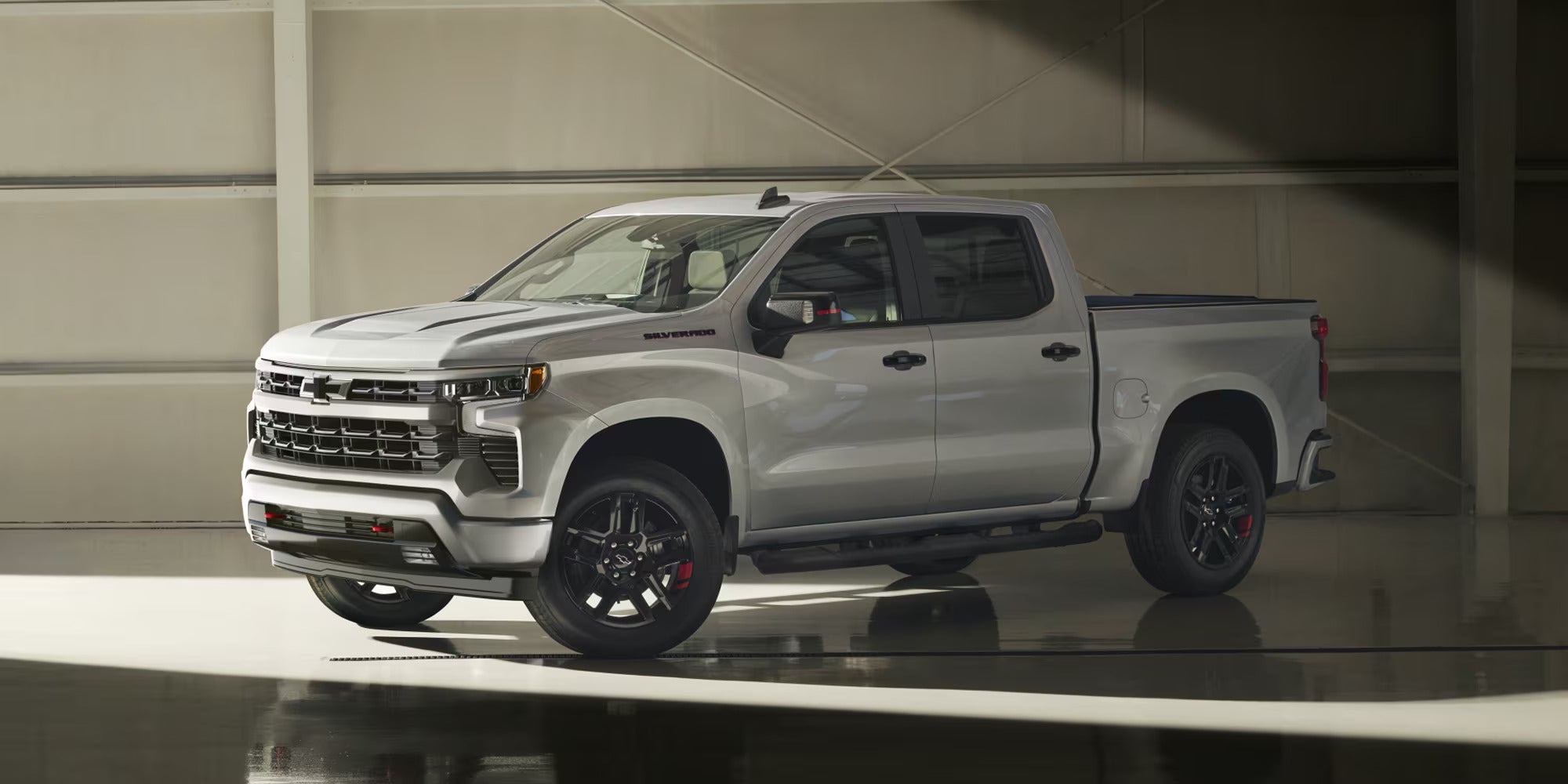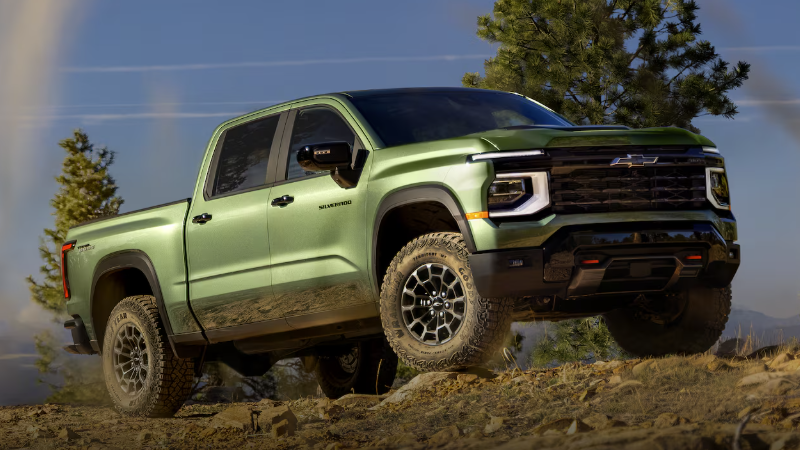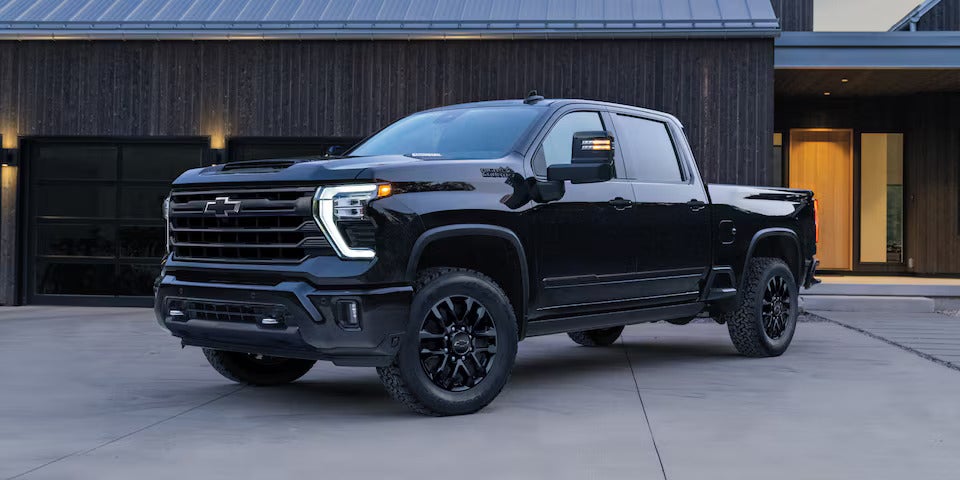





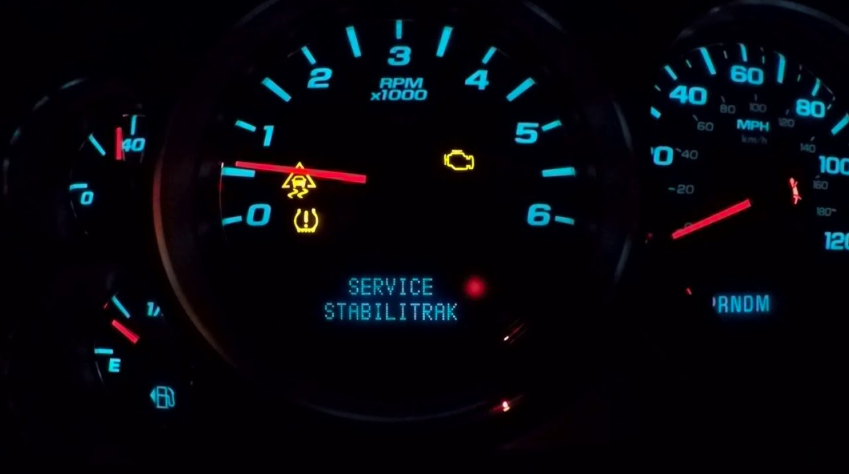
If you've ever felt your Silverado's engine power dip or the brakes pulse on their own while driving through mud or snow, that's StabiliTrak stepping in. Knowing how to turn off StabiliTrak on a Chevy Silverado, and when it actually makes sense to do so, matters for anyone who drives off-road, tows heavy loads, or just wants more control in specific situations. Our service team works on Silverados from every generation, and this guide breaks down the process for each one. What Is StabiliTrak on a Chevy Silverado? StabiliTrak is GM's trademarked electronic stability control system, a name that's been in use since 1996. On a Chevy Silverado, it works alongside the Anti-Lock Braking System (ABS) and Traction Control System (TCS) to keep the truck tracking where you're steering it. The system compares your intended path, based on steering angle, to the truck's actual path. When those two things don't match, it applies braking force to individual wheels to pull the truck back in line. It relies on wheel speed sensors and a steering angle sensor, plus a yaw sensor that picks up on side-to-side rotation. The system can reduce engine power temporarily to help regain traction, though it doesn't limit power during normal driving. Cruise control will also disengage automatically if TCS or StabiliTrak activates, worth knowing if you're on the highway and hit a slick patch. Is It Safe to Turn Off StabiliTrak? Whether it's safe to disable StabiliTrak depends entirely on the driving conditions you're facing. The system helps in situations where your Silverado's actual movement doesn't match your steering input, which covers most of the time you're behind the wheel. But there are specific scenarios where the wheel spin StabiliTrak tries to prevent is actually useful to you. When Turning It Off Helps (Snow, Mud, Sand, Off-Road) If you're stuck in deep snow, mud, or sand, StabiliTrak and TCS can work against you by cutting power to spinning wheels when what you need is momentum to rock free. Off-road drivers often turn off traction control and StabiliTrak together to allow more wheel slip, which helps with climbing loose or uneven terrain. Both systems auto-disable in 4WD Low (4LO), since that mode assumes you need maximum wheel articulation. When You Should Leave It On Outside those low-traction, off-road scenarios, StabiliTrak should stay active. This holds especially true around Pasadena, Texas, where sudden downpours and slick highways are part of everyday driving. StabiliTrak's ability to correct skids during sudden lane changes or wet-road maneuvers is exactly the kind of protection you want on a rain-soaked freeway. How to Turn Off StabiliTrak by Model Year The steps for how to turn off StabiliTrak on a Chevy Silverado have changed across generations, and terminology varies by trim and model year. The table below breaks down what to expect on each platform. Model Years Button/Menu Location Dash Indicator Reset Method Notes 1999–2006 (GMT800) Varies by trim; often tied to 4WD controls Varies by trim Consult owner's manual No universal button across all trims 2007–2013 (GMT900) TCS/StabiliTrak button on dash "StabiliTrak Off" and "Traction Control Off" Press and hold button 5 seconds Hold time can vary slightly by truck 2014–2018 (K2XX) TCS/StabiliTrak button on dash Single press: TCS Off; hold ~5 sec: both off Press and release, or press and hold Auto-disables in 4LO 2019–2026 (T1XX) TCS/StabiliTrak button on dash Single press: TCS Off; hold ~5 sec: both off Press and hold until lights stay on Auto-disables in 4LO 1999–2006 Silverado (Early StabiliTrak Systems) Most GMT800-generation Silverados didn't have StabiliTrak at all. Electronic stability control arrived on GM trucks gradually and didn't become standard equipment until the federal phase-in later that decade, so what you'll find on a truck from these years is traction control, often with no dedicated stability control button anywhere on the dash. If your GMT800 truck does have a stability or traction control switch, placement varies by trim and model year. The owner's manual in your glovebox is the reliable answer here, or bring it by and our technicians will tell you in a minute what your specific truck has. 2007–2013 Silverado (GMT900 Generation) This generation introduced a more standardized approach. Press and hold the TCS/StabiliTrak button for about five seconds until both the "Traction Control Off" and "StabiliTrak Off" indicators appear on the dash. That's the procedure GM's owner's manuals describe, though the exact hold can feel a touch different from truck to truck. You might come across suggestions to pull the ABS fuse as a workaround for disabling these systems. We wouldn't recommend that route. Pulling the ABS fuse disables your Anti-Lock Braking System entirely, not just StabiliTrak, and that's a significant safety tradeoff for a shortcut that isn't part of any factory procedure. 2014–2018 Silverado (K2XX Platform) On K2XX-platform Silverados, the button behavior became more refined. A single press and release of the TCS/StabiliTrak button disables traction control only, which shows up as "Traction Control Off" on the dash or Driver Information Center (DIC). Pressing and holding the button for about 5 seconds disables both TCS and StabiliTrak together, confirmed by both indicators lighting up. 2019–2026 Silverado (T1XX Platform) The T1XX platform carries forward the same button logic. Press and release to disable traction control alone. Press and hold until both the Traction Control Off and StabiliTrak Off indicators illuminate to disable both. Press and release again to restore both systems. Both turn back on automatically every time you start the truck. Before going further with any permanent disabling of these systems, it's worth understanding the regulatory side. Permanently disabling StabiliTrak may violate Federal Motor Vehicle Safety Standard FMVSS 126, which requires electronic stability control on vehicles manufactured on or after September 1, 2011 (with full phase-in for altered or multi-stage vehicles by September 1, 2012). Beyond the compliance angle, a permanently disabled system could complicate matters after an accident or during vehicle inspections, so it's worth discussing with a professional. This is general factual information, not legal advice, so if you're considering a permanent modification, it's worth talking to a professional first. If you have questions about your specific truck, reach out to our team and we can point you in the right direction. StabiliTrak Off vs. Traction Control Off: Knowing the Difference A lot of confusion around this topic comes down to not knowing these are two related but distinct systems. TCS focuses on wheel spin: it brakes a spinning wheel or reduces engine power when you're accelerating and one wheel loses grip, common on icy inclines or loose gravel. StabiliTrak, on the other hand, focuses on overall vehicle direction, applying braking to individual wheels when your Silverado's actual path diverges from where you're steering, typically during skids or sharp evasive maneuvers. A single button press turns off TCS only. Holding that same button turns off both TCS and StabiliTrak together, which is why you'll sometimes see both indicators displayed on the dash at once. Knowing this distinction helps you pick the right level of intervention for whatever driving situation you're in. What Triggers the 'Service StabiliTrak' Warning Light A Service StabiliTrak warning doesn't necessarily mean something's seriously wrong. It means the system found an issue it can't safely work around, and these issues usually trace back to a handful of common culprits. Common Sensor and Module Issues Engine misfires are a frequent trigger, particularly in 2009–2013 trucks equipped with Active Fuel Management/Displacement on Demand (AFM/DoD), which are known to develop lifter failures that cause misfires. Dirty or failing wheel speed sensors can send inaccurate data to the system, as can a misaligned or defective steering angle sensor. Low battery or alternator voltage can disrupt the electrical signals these systems depend on, and an ABS module failure will often trigger both the ABS light and the StabiliTrak warning together. Low brake fluid is another straightforward cause worth checking first. One scenario we see often: the light comes on after a battery disconnect or a wheel alignment, usually because the steering angle sensor wasn't recalibrated afterward. You can generally drive with a StabiliTrak light on for short distances, but the system may be partially or fully disabled while the light is up. Whether it's safe to keep driving depends on what triggered it. If it's paired with an ABS light or the truck feels unstable, get it looked at before continuing to drive. How to Reset the Service StabiliTrak Light There are two at-home steps worth trying before heading to a shop. First, disconnect both battery cables for 10 to 15 minutes; this can sometimes clear temporary glitches, though it won't fix underlying mechanical failures. Second, try a steering wheel reset: turn the wheel all the way to the left, then all the way to the right, then restart the engine. This handles steering angle sensor confusion in many minor cases, even without a code reader. If the light returns after trying these at-home methods, an OBD-II diagnostic scan is the next step, and that's best left to a certified technician. Our factory-trained technicians at Monument Chevrolet can run that scan and, if needed, recalibrate the steering angle sensor. Turning StabiliTrak Back On Turning StabiliTrak back on is simple: press and release the same button you used to disable it. The dash indicators for "Traction Control Off" and "StabiliTrak Off" clear once the systems are back online, confirming both are active again. FAQ Is it illegal to turn off StabiliTrak? Temporarily disabling StabiliTrak for specific driving conditions isn't illegal, but permanently disabling it may violate FMVSS 126 for vehicles manufactured on or after September 1, 2011, with full phase-in for altered or multi-stage vehicles by September 1, 2012, and it could complicate insurance claims or state inspections. Will StabiliTrak turn back on by itself? StabiliTrak doesn't re-engage on its own while you're driving, though both systems turn back on automatically every time you restart the truck. Some model years may also restore stability control above a certain speed, so check your owner's manual. It also auto-disables whenever you shift into 4LO. Visit Monument Chevrolet for Sales and Service in Pasadena Monument Chevrolet has served Pasadena, Texas for more than 65 years, originally as Timmers Chevrolet, and we remain the only family-owned Chevrolet dealership in the Greater Houston area. Our factory-trained technicians have worked on Silverados across every generation covered in this guide, including early GMT800 trucks and current T1XX-platform models. Schedule Service or Explore a New Silverado If your Silverado's Service StabiliTrak light won't clear, or you'd rather have a professional confirm what's triggering it, schedule a service appointment with our team. And if your current truck has you thinking about an upgrade, you can also browse our new Silverado 1500 inventory at our Pasadena location on Pasadena Fwy.
2027 Chevy Traverse RS vs Z71
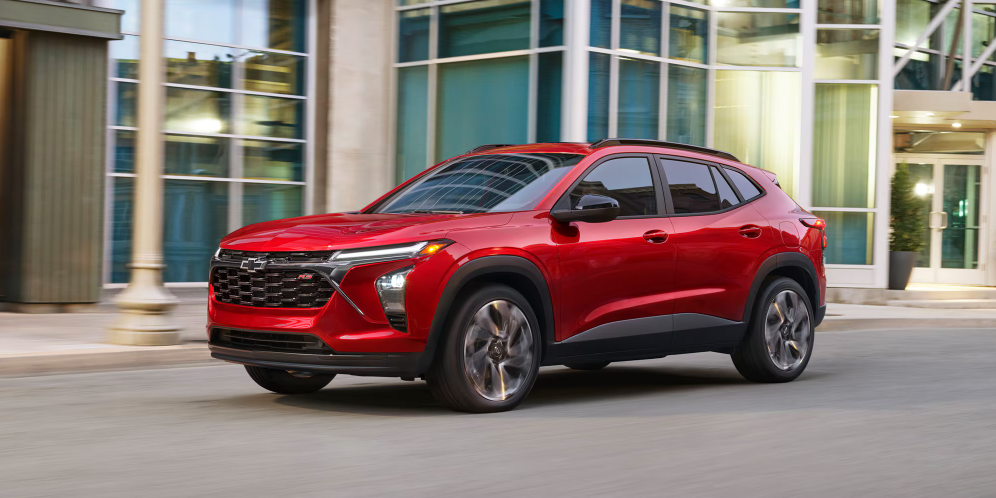
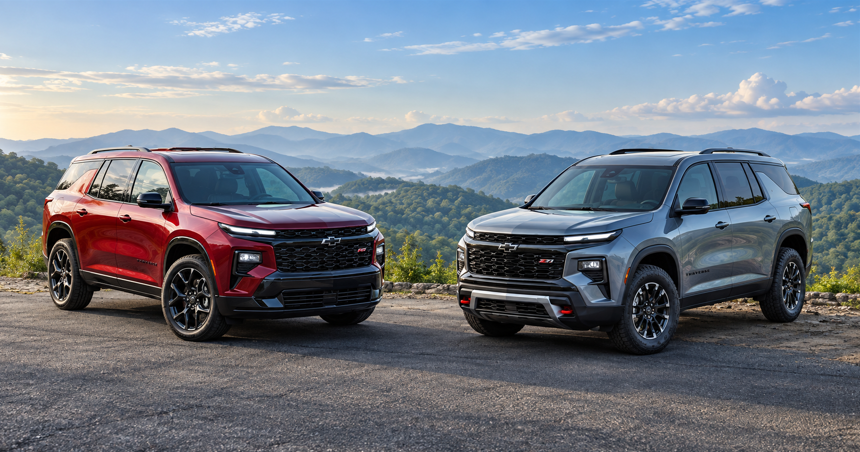
Picking between the 2027 Chevy Traverse RS and Z71 comes down to how you drive day to day, not what looks best in the driveway. Both trims share the same engine and seven passenger layout, but Chevrolet built them for different jobs: one leans into sporty tech and highway comfort, the other into all-weather traction and mild off-pavement capability. If you're weighing the 2027 Chevy Traverse RS vs Z71 for your own garage, we'll walk through the specs, pricing, and real-world use cases so you can decide with confidence. You can also browse our new Traverse inventory to see what's currently available at our Pasadena, Texas showroom. 2027 Chevy Traverse RS vs Z71 at a Glance Chevrolet builds both the 2027 Traverse RS and Z71 around the same 2.5L turbocharged four-cylinder engine, rated at 328 horsepower and 326 lb-ft of torque, paired with an 8-speed automatic transmission. Chevy Traverse 0 to 60 performance and everyday drivability stay consistent whether you pick the RS or the Z71. The real differences show up in drivetrain configuration, ride height, wheel design, and how each trim handles weather and terrain. AWD is optional on the RS (and on the LT), running $2,000 extra, while the Z71 comes with a twin-clutch AWD system as standard equipment built specifically for traction in changing conditions. Every 2027 Traverse, regardless of trim, carries a maximum tow rating of 5,000 lbs. Towing capability isn't a factor separating these two trims. Key Spec Comparison Table Spec Traverse RS Traverse Z71 Engine/Powertrain 2.5L turbo, 328 hp, 326 lb-ft 2.5L turbo, 328 hp, 326 lb-ft Drivetrain FWD standard, AWD optional ($2,000) Advanced Twin-Clutch AWD standard Ground Clearance/Off-Road Feature 6.8 inches 7.8 inches, Terrain Mode, Hill Descent Control, skid plate Wheels 22-inch high gloss black wheels 18-inch high gloss black machined-face wheels, all-terrain tires Starting Price $55,800 $49,100 Towing 5,000 lbs 5,000 lbs Design and Styling: Sporty RS vs Rugged Z71 The 2027 Traverse RS and Z71 wear their personalities on the outside. Chevrolet gives the RS a blacked-out, athletic look for drivers who want their SUV to feel sharp on city streets, while the Z71 goes taller and tougher, signaling it's ready for gravel roads and rougher weather. Exterior Differences Chevrolet equips the RS with blackout styling across the grille, roof rails, and badging, plus 22-inch high gloss black painted aluminum wheels for a cohesive blacked-out theme. It also includes rain sensing wipers, power folding and auto dimming mirrors, RS badging, and a flat bottom steering wheel that reinforces the sporty cabin feel. The Z71 rides on 18-inch high gloss black machined face wheels wrapped in all-terrain tires, with a full inch of extra ground clearance bringing it to 7.8 inches against the RS at 6.8. That added clearance, along with skid plate protection and an off-road tuned suspension, gives the Z71 a genuinely different silhouette from the RS. Interior Materials and Cabin Features Inside, the 2027 Z71 gains a new Oregon seat color, a natural tan finish that replaces the Torch Red accents the trim carried previously. The RS keeps its Jet Black interior with Red decor accents and stitching, and adds heated second row seats, power folding second and third row seating, ambient lighting, and a heated steering wheel. Both cabins feel upscale, but the RS clearly targets comfort-focused families while the Z71 leans toward a more casual, hard-wearing look. Performance and Capability Differences Engine and AWD System Comparison Since both trims share the same 2.5L turbocharged engine and 8-speed automatic, acceleration and daily drivability feel nearly identical between RS and Z71. Adding optional AWD to the RS shifts the feel slightly since that setup adds weight, but power delivery stays consistent. Where things diverge is drivetrain philosophy: Chevrolet reserves the Advanced Twin-Clutch AWD system exclusively for the Z71 as standard equipment, giving it a traction advantage in wet or loose conditions without requiring buyers to pay extra for it. Think of it less as one trim outmuscling the other and more as two different starting points for the same underlying hardware. Fuel economy shifts too: FWD models are EPA estimated at 20 city, 26 highway, and 22 combined MPG, while the AWD Z71 comes in at 20 city, 24 highway, and 21 combined. An AWD RS returns those same figures, so the gap is down to the drivetrain rather than the Z71's extra ride height. Z71 Off-Road Features and Terrain Modes Chevrolet builds the Z71 with Terrain Mode and Hill Descent Control, along with an off-road tuned suspension and skid plate protection underneath. These features make the Z71 well-suited for gravel driveways, muddy trailheads, or the kind of unpaved roads you'll find outside Pasadena on the way to weekend outings. The capability here is off-road-inspired and built for mild terrain rather than true rock crawling or technical trail work. Families dealing with Houston-area rain and flooding will likely appreciate the added traction more than hardcore trail use. If you want to feel this difference firsthand, contact our team to schedule a comparison test drive between the two trims. Technology and Safety Features Shared Across Trims Both the RS and Z71 come standard with a 17.7-inch touchscreen, an 11-inch digital driver display, wireless charging, wireless Apple CarPlay and Android Auto, and USB-C ports in all three rows, with Google built-in compatibility available. Chevrolet also adds a new interior camera for 2027, standard on the RS, for added peace of mind on long drives or when kids are in the back seats. On the safety side, every 2027 Traverse includes Chevy Safety Assist, a six-feature bundle covering Automatic Emergency Braking, Front Pedestrian Braking, Forward Collision Alert, Lane Keep Assist with Lane Departure Warning, IntelliBeam automatic high beams, and a Following Distance Indicator. Blind Zone Steering Assist, Rear Cross Traffic Braking, and a Safety Alert Seat come standard as well, part of the more than 20 standard safety and driver assistance features Chevrolet fits to every trim. Z71 buyers can add the Driver Confidence Package for HD Surround Vision, a Rear Camera Mirror, Rear Pedestrian Alert, and Traffic Sign Recognition, or the Enhanced Driving Package for Super Cruise and Driver Attention Assist. The RS includes that content as standard equipment. The biggest tech differentiator is Super Cruise itself. Chevrolet makes it standard on the RS for 2027, complete with a 3-year OnStar Super Cruise plan, while it remains an optional add-on for the Z71 and LT. For drivers who spend a lot of time on Houston freeway commuting, that hands-free highway assist is a meaningful RS advantage worth roughly the price of the package on its own. 2027 Traverse Price Comparison: RS vs Z71 The 2027 Chevy Traverse Z71 starts at $49,100 with its Advanced Twin-Clutch AWD included, while the RS starts at $55,800 with front-wheel drive and $57,800 with AWD. All of these are Chevrolet's published starting MSRPs and exclude destination charge, tax, title, license, and dealer fees. For reference, the entry-level LT starts at $40,800 on the same basis, and the High Country tops the four-trim lineup at $56,100. Because final pricing varies by configuration and current offers, we'd recommend checking our inventory or reaching out to get pre-approved for financing before you finalize a budget. Cargo Space, Seating, and Towing Capacity Both the RS and Z71 offer identical cargo and passenger figures, which makes this category less about choosing between them and more about confirming the Traverse fits your family's needs. The RS and Z71 each seat seven passengers, with second-row captain's chairs standard on both. Eight-passenger seating is available only on the LT, which offers an optional second-row bench seat. Cargo space checks in at 22.9 cubic feet behind the third row, expanding to 56.6 cubic feet with the third row folded, and a class-leading 98 cubic feet when both rear rows fold flat. Second row legroom measures 41.5 inches, with 32.1 inches in the third row, comfortable enough for adults on longer trips. Towing capacity holds steady at 5,000 lbs across every 2027 Traverse trim and drivetrain when properly equipped, which is worth knowing if you're planning to tow a boat out to Galveston Bay for a weekend on the water. Neither trim gains a towing edge here, so that decision comes down to styling, tech, and drivetrain preference instead. Which 2027 Traverse Trim Is Right for You? Choose the Z71 If You… You regularly drive on gravel, unpaved roads, or deal with heavy Houston-area rain and want that standard AWD traction without paying extra for it. A slightly more rugged, utilitarian interior that shrugs off mud, sand, and outdoor gear also matters more to you than a plush cabin. Choose the RS If You… Most of your miles come from highway commuting, and standard Super Cruise for hands-free stretches on long drives sounds appealing. A sportier blacked-out look and premium comfort touches like ventilated front seats matter more to you than the extra ground clearance the Z71 offers. Frequently Asked Questions About the 2027 Chevy Traverse RS vs Z71 Is the Chevrolet Traverse a good car overall? Chevrolet has positioned the Traverse as a family-focused three-row SUV with strong tech and safety features across trims, making it a solid option for buyers who want space and standard safety assistance features. Are Chevy Traverse models good cars for towing? Yes, every 2027 trim offers a 5,000 lb max tow rating when properly equipped, and the trailering package is included, which covers small boats, campers, and utility trailers for most Texas families. Does the Traverse RS require AWD? No, AWD is a $2,000 option on the RS, while FWD comes standard. What is the 2027 Traverse release date? The 2027 Traverse is on sale now. Chevrolet lists full pricing and specs for all four trims, and you can check our inventory to see what's on the ground in Pasadena. Visit Monument Chevrolet to Test Drive the 2027 Traverse See the Differences for Yourself Specs on a page only tell part of the story. Feeling the twin-clutch AWD grip on a wet road, or testing Super Cruise on the freeway, makes the difference between these trims much clearer. Ready to Compare the Traverse RS and Z71 in Person? Stop by Monument Chevrolet at 3940 Pasadena Freeway, Pasadena, TX 77503 to browse our new Traverse inventory, schedule a service appointment for your current vehicle, or get pre-approved for financing before you visit. As a family-owned dealership serving the Greater Houston area for over 50 years, we're glad to walk you through both trims with straightforward pricing and no pressure.