





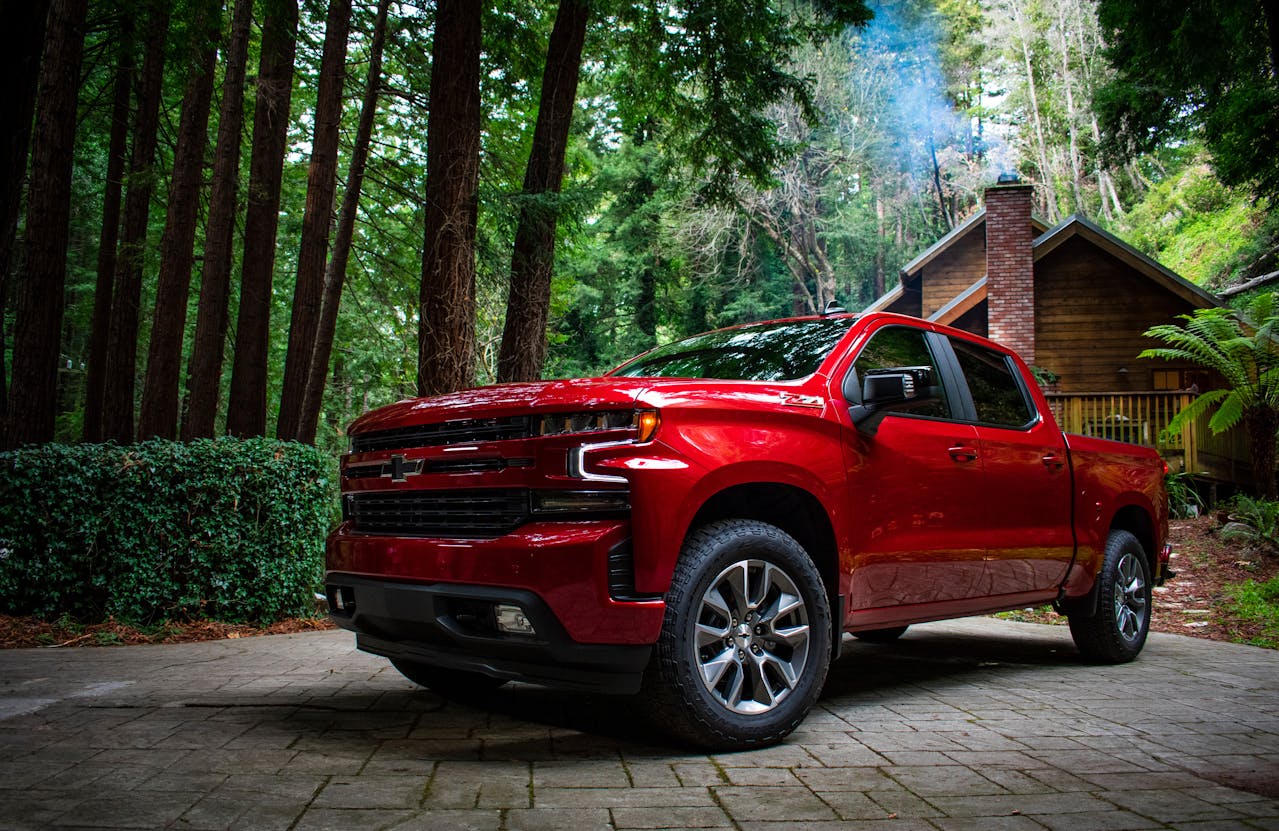
Shopping for a used truck in Pasadena? You’re likely deciding between two American icons: the Chevrolet Silverado and the Ford F-150. These pickup titans have battled for decades, each with dedicated fans. Let’s explore what makes each unique and determine which used truck suits your needs better.
Reliability and Performance
When buying used, reliability becomes crucial. Nobody wants their truck to become a repair shop regular. The Chevrolet Silverado passed the reliability test with a “Great” rating from J.D. Power Quality and Reliability ratings, with an improved score of 84 from 80 in recent years. In contrast, the F-150 scored 78 out of 100 in 2023. RepairPal gives both trucks a reliability rating of 3.5 out of 5.0 but ranks the Silverado fifth among full-size trucks compared to the F-150’s seventh place position.
Annual repair costs tell a similar story. You can expect to pay about $714 yearly in repairs for the Silverado versus $788 for the F-150. While Chevrolet Silverado vs. Ford F-150 reliability comparisons show similar repair severity when issues arise, the Silverado experiences fewer problems overall.
Under the hood, recent Silverados offer impressive options. With an available 6.2-liter V-8 engine that produces 420 horsepower and 460 pound-feet of torque, the 2024 Silverado High Country hits 60 mph in just 5.4 seconds. Other options include the standard 5.3-liter V-8 engine, a turbocharged 2.7-liter four-cylinder engine with 420 pound-feet of torque, and a 3.0-liter Duramax diesel engine delivering 495 pound-feet of torque.
The F-150 counters with its own set of powertrains. The 2024 model’s twin-turbocharged 2.7-liter V-6 engine makes 325 horsepower, while the 5.0-liter V-8 and twin-turbo 3.5-liter V-6 engines both reach 400 horsepower. Ford also offers a hybrid combining the twin-turbo 3.5-liter V-6 engine with an electric motor for 430 horsepower and up to 700 miles of driving range.
When comparing the Ford F-150 vs. the Chevrolet Silverado 1500 specs, both deliver a strong performance. Chevy offers more raw power at the top end, while Ford provides better fuel efficiency with its hybrid option.
Interior and Comfort
Both manufacturers have significantly improved their interiors in recent years. The Silverado starts practical in base trims, adding comfort and tech as you move up. Lower trims feature a 7-inch touch screen, while higher-end models boast a 13.4-inch display paired with a digital gauge cluster. Physical buttons for climate and audio controls are practical if you’re wearing work gloves.
Silverado cab configurations differ significantly. The Regular Cab seats three across, the Double Cab adds a second row with about 35 inches of legroom, and the Crew Cab provides a generous 43 inches of rear legroom.
Recent F-150s, including the 2024 model year, feature dual 12-inch displays — a digital gauge cluster and central touch screen — running Ford’s cloud-connected Sync 4 infotainment with 5G LTE Wi-Fi hot spot, wireless Apple CarPlay/Android Auto, and connected navigation. While the base XL comes with vinyl flooring and manually adjustable seats, upper trims add luxuries such as leather upholstery, heated/ventilated seats, dual-zone climate control, and push-button start.
Audio systems range from a basic four/six-speaker setup to the premium Bang & Olufsen (B&O) Unleashed system with 14 speakers and a subwoofer in the King Ranch. The Lariat, Tremor, and Platinum feature an eight-speaker B&O system with available upgrades.
The F-150 offers three cab styles: the Regular Cab (seats three), the SuperCab (seats six with rear-hinged half doors and tight second-row space), and the spacious SuperCrew (seats six with full rear doors and generous legroom). STX and higher trims replace the front bench with separate seats, reducing capacity to five. Available Max Recline front seats fold flat for sleeping but sacrifice some everyday comfort.
When comparing the High Country vs. the King Ranch — the premium trims from each brand — you’re choosing between Western-inspired luxury with the King Ranch and a more modern, upscale approach with the High Country.
Capabilities and Practicality
For many truck buyers, towing and hauling capabilities are paramount. Recent F-150s can tow up to 13,500 pounds with the twin-turbo 3.5-liter V-6 engine. The 5.0-liter V-8 pulls up to 13,000 pounds, while the hybrid maxes at 12,700 pounds.
The Silverado isn’t far behind, with a max towing capacity of 13,300 pounds, which is just 200 pounds shy of the class-leading F-150. When deciding between the Chevrolet Silverado and the Ford F-150 based on towing, the Ford has a slight edge, but the difference is minimal.
For bed cargo, the Silverado can handle between 1,870 and 2,280 pounds, depending on the configuration. The Silverado’s long bed boasts 89.1 cubic feet of cargo volume and stretches to 8.2 feet, which is slightly longer than Ford’s 8-foot bed.
A significant Silverado advantage is that its Durabed is substantially wider at 71.4 inches at floor level than the F-150’s bed, which measures just 50.6 inches at the wheel wells. This extra width makes a difference when loading wide materials such as plywood.
Safety and Technology
Modern trucks include safety features that were unimaginable a decade ago. Recent Silverados include ABS, stability control, six airbags, forward collision alert, automatic emergency braking, pedestrian detection, lane-keep assist, and lane-departure warning. Higher trims add blind-spot monitoring, rear cross-traffic alert, and parking assistance. The High Country trim includes adaptive cruise control, with Super Cruise semi-autonomous driving available on top models.
The F-150 comes standard with Ford’s Co-Pilot360 2.0 suite, offering similar features to the Silverado. Higher trims add a surround-view camera system, trailer backup assistance, and Ford’s BlueCruise hands-free highway driving system.
For F-150 vs. Silverado safety comparisons, both trucks offer comprehensive protection with comparable feature sets designed to prevent accidents and protect during crashes.
Which Truck Should You Choose?
After comparing the Chevrolet Silverado vs. the Ford F-150 features and capabilities, both make strong cases. The F-150 offers slightly better towing capacity and an efficient hybrid option, while the Silverado provides better reliability ratings, a more practical bed design, and impressive engines.
The Ford F-150 vs. Chevrolet Silverado reliability comparison gives the Chevrolet a slight edge, which is important when you’re buying used. Lower annual repair costs and fewer reported issues make the Silverado a potentially smarter long-term investment.
Is the F-150 better than the Chevrolet Silverado? For some buyers, possibly. But for most Pasadena truck shoppers seeking a dependable used pickup with a practical bed design and strong performance, the Silverado makes a compelling case as the better all-around choice.
Test Drive a Used Silverado Today
We’ve got a great selection of well-maintained used Silverados at Monument Chevrolet in Pasadena. A used Silverado offers tremendous value if you’re a Pasadena truck buyer, with its better reliability ratings, lower ownership costs, and a superior bed design. Drop by our dealership today and look at our used specials lineup, or check our online inventory of used commercial trucks if you need something heavy-duty.
Image by Mr. Location Scout is licensed with Pexels License
Connect with us


